Digital Agency

Growth Focus
  • Helping Businesses Grow Worldwide — SEO Services That Drive Visibility,     High-Performance Website Development,     PPC Marketing for Better Reach,     Digital Marketing Built for Growth,     Social Media That Builds Your Brand,     Smart Solutions. Real Business Growth.

March 2026

digital marketing jobs

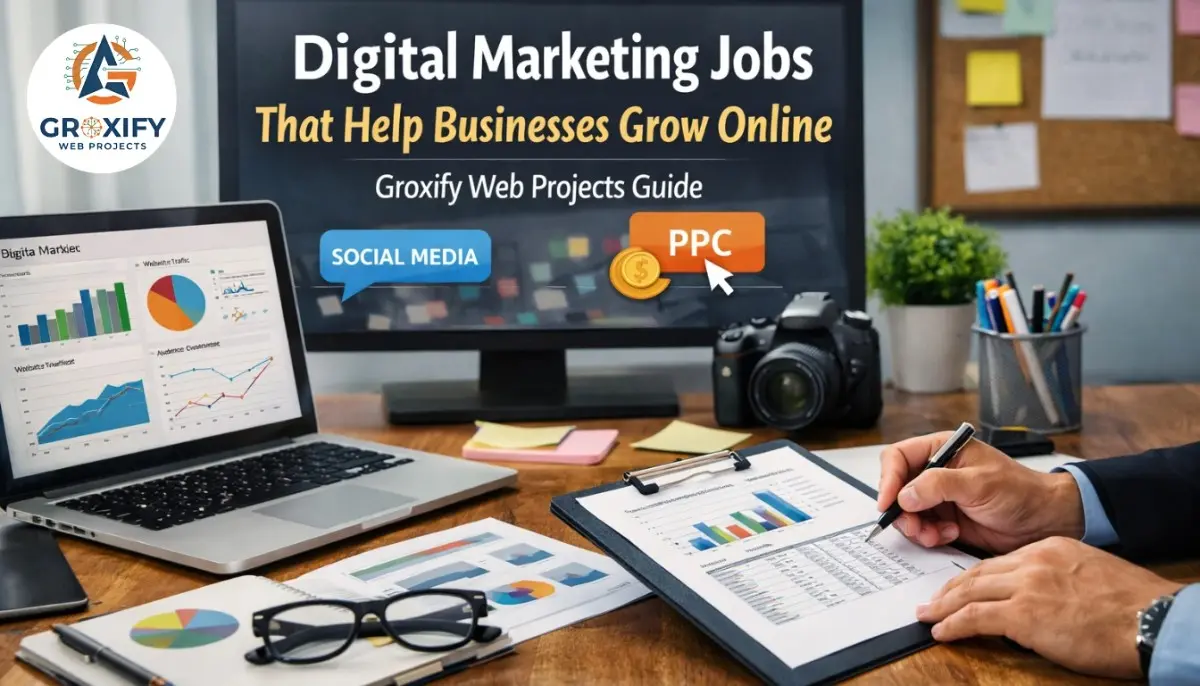
Digital Marketing Jobs That Help Businesses Grow Online – Groxify Web Projects Guide

Why Are Digital Marketing Jobs Growing So Fast in India? If you search “digital marketing jobs” today on Google or LinkedIn, you will notice something interesting. New listings appear almost every day. Many founders, startups, and even traditional businesses are actively hiring. This growth is not random. It is happening because how businesses reach customers in India has changed completely. In cities like Delhi, Gurgaon, Noida, Bangalore, and Mumbai, most businesses now depend on online visibility. Whether it is a startup in Sector 62 Noida, a restaurant in Connaught Place, or a local service provider in Lajpat Nagar, everyone wants customers from Google, Instagram, and YouTube. That demand naturally creates more digital marketing openings. A few clear reasons explain why digital marketing jobs in India are expanding quickly: While working with businesses through Groxify Web Projects, I often see founders facing the same problem. They launch a website or product but struggle to bring traffic or sales. That is where digital marketing professionals become important. They help businesses attract the right audience, convert visitors, and build brand presence online. This is why digital marketing jobs are not only increasing in big companies. Startups, small agencies, freelancers, and even local service businesses are creating roles for SEO specialists, social media managers, PPC experts, and content strategists. For students, freelancers, and career switchers, this shift is creating one of the most accessible career opportunities in India today. But understanding the roles and career path properly is important before entering the field. What Exactly Are Digital Marketing Jobs and What Do People Actually Do? When people first hear the term digital marketing jobs, they often think it simply means posting on social media or running ads. In reality, the work is much broader and more practical. The main goal is simple. Help a business get the right audience online and convert that attention into leads or sales. In most companies across Delhi, Noida, Gurgaon, Bangalore, or even smaller cities, digital marketing professionals handle different parts of the online customer journey. Some focus on visibility, some focus on traffic, and others focus on conversions. A typical digital marketing team usually works on areas like: In many companies, especially startups, one person may handle multiple tasks. In larger organisations the roles become more specialised. From what I observe while guiding projects at Groxify Web Projects, businesses are not just looking for people who know tools. They want professionals who understand customer behaviour. Why someone clicks a link. Why someone leaves a page. Why a campaign works or fails. So digital marketing jobs are really about solving one simple business problem again and again: How do we bring the right people to this business online and turn them into customers? What Are the Most Common Digital Marketing Job Roles in India Right Now? When people search for digital marketing jobs in India, they often assume there is only one job title. In reality, digital marketing is a combination of many specialised roles. Each role focuses on a different part of the online growth process like traffic, engagement, or conversions. Across agencies, startups, and companies in areas like Noida Sector 62, Gurgaon Cyber City, and South Delhi, the same few roles appear repeatedly in job listings. Companies hire different specialists depending on what part of marketing they want to improve. Here is a simple overview of the most common digital marketing roles you will see today. Job Role What They Mainly Do SEO Specialist Improve website ranking on Google and increase organic traffic Social Media Manager Manage Instagram, LinkedIn, YouTube, and build audience engagement PPC / Performance Marketing Specialist Run paid ads on Google Ads, Facebook Ads, and optimise campaigns Content Writer / Content Strategist Create blogs, landing pages, and marketing content that attracts visitors Email Marketing Specialist Build email campaigns and nurture leads into customers Digital Marketing Executive Handle multiple marketing tasks in small companies or agencies Marketing Analyst Study campaign data and improve marketing decisions Digital Marketing Manager Plan strategy and manage the entire digital marketing team These roles exist because businesses now depend heavily on online channels to reach customers. SEO specialists improve visibility, social media managers build brand awareness, and paid ads experts bring faster leads through targeted campaigns. While working with businesses through Groxify Web Projects, I have noticed a clear pattern. Most companies initially hire a Digital Marketing Executive who handles several tasks together. As the business grows, they begin hiring specialists like SEO experts, paid advertising managers, and content strategists. For someone entering the field, this variety is actually helpful. It means you can start with general digital marketing work and later specialise in the area that suits your strengths best. How Much Salary Can You Expect in Digital Marketing Jobs in India? Salary is one of the first questions people ask when exploring digital marketing jobs in India. The honest answer is simple. Income varies a lot depending on skills, experience, and the type of company you work for. For example, startups in places like Gurgaon Cyber City, Noida Sector 62, and Bangalore tech hubs usually pay higher salaries compared to smaller agencies. Skills like SEO strategy, paid advertising, and analytics also increase earning potential. Most people start small, but the growth can be quite strong once real results begin showing. Typical Digital Marketing Salary in India Experience Level Common Roles Average Salary Range Fresher (0–1 year) SEO Executive, Social Media Executive, Marketing Intern ₹15,000 – ₹30,000 per month Entry Level (1–2 years) Digital Marketing Executive, Content Marketer ₹3L – ₹5L per year Mid-Level (3–5 years) SEO Specialist, PPC Manager, Social Media Manager ₹6L – ₹12L per year Senior Level (6+ years) Digital Marketing Manager, Growth Manager ₹12L – ₹25L+ per year Freshers typically begin around ₹15,000–₹30,000 per month, especially in agency roles where they learn practical work quickly. With a few years of experience, salaries usually move into the ₹6L–₹12L yearly range, and senior professionals managing teams or campaigns can cross ₹20L per year in larger companies.

Digital Marketing Jobs That Help Businesses Grow Online – Groxify Web Projects Guide Read More »
digital marketing a good career

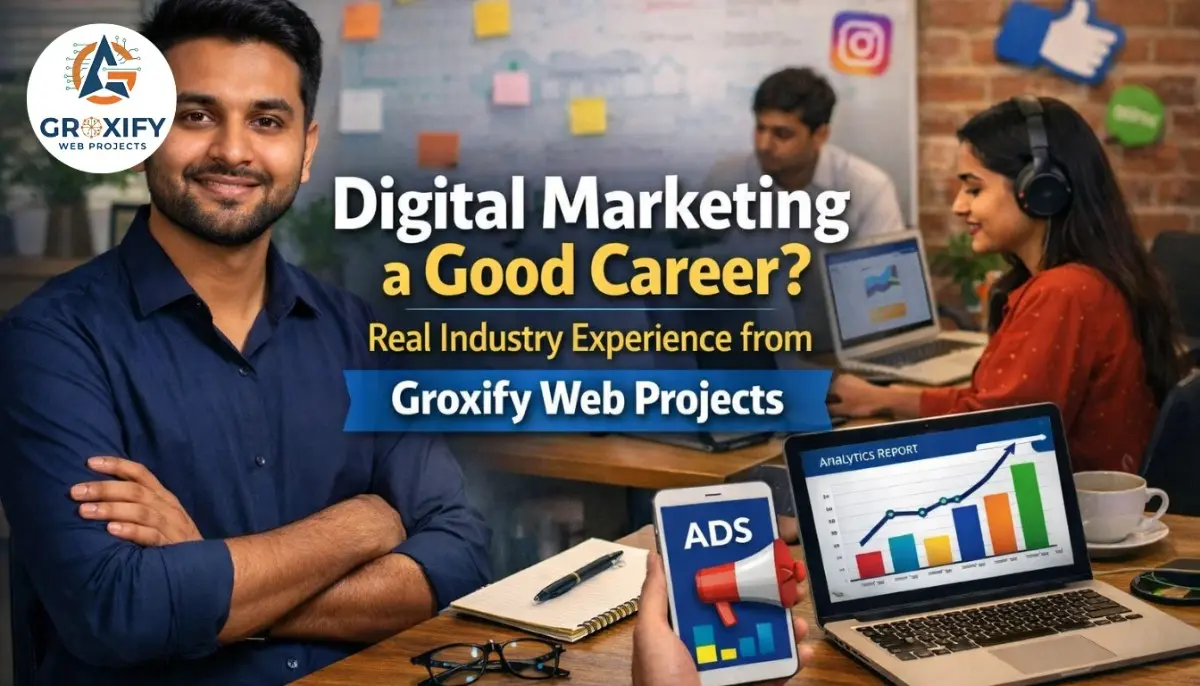
Digital Marketing a Good Career? Real Industry Experience from Groxify Web Projects

Is Digital Marketing a Good Career in India in 2026? What Is Actually Happening in the Market If you are a student, freelancer, or someone thinking of switching careers, this question comes up very often: “Digital marketing a good career hai kya?” In 2026, the honest answer is yes, but only if you approach it practically. The market has grown fast, but it has also become more competitive. Across India, from Delhi NCR to cities like Pune, Bangalore, Jaipur, and even smaller towns, businesses now depend heavily on online channels. Search engines, social media ads, influencer marketing, and content are now the main ways companies find customers. Because of this shift, companies are continuously hiring people who understand digital platforms. In fact, digital marketing jobs in India have grown nearly 30% in the last two years, and demand is expected to keep increasing steadily. Another important shift is where marketing money is going. Digital media already captures around 46% of India’s total advertising spending, showing how quickly brands are moving online. From what I see daily while working in this industry, this demand is not limited to big tech companies. Today almost every business needs digital marketing: This is why the career in digital marketing has expanded far beyond traditional marketing roles. At the same time, there are some realities many people do not talk about. Many beginners think digital marketing is easy money. They join random courses, watch YouTube videos, and expect quick income. In reality, companies hire people who can generate real results like leads, traffic, and revenue. If someone only knows theory, they struggle. But if someone learns practical skills like SEO, paid ads, analytics, and content strategy, opportunities open quickly. Even entry-level salaries today usually start around ₹2–5 lakh per year, and experienced professionals can reach ₹20–25 lakh or more depending on skills and role. Another thing changing the market is AI. Many companies now want marketers who can work with automation, data, and AI tools because around 35% of organisations are actively looking for AI-driven marketing skills. So the short answer is simple: If you are someone who enjoys learning new tools, understanding customer behaviour, and experimenting with strategies, this field can open many opportunities over the next few years. What Exactly Is a Career in Digital Marketing and What Work Do People Actually Do Daily Many people imagine a career in digital marketing as simply posting on Instagram or running a few ads. In reality, the work is much broader and more practical. On a normal working day, a digital marketer focuses on bringing visitors, leads, or sales through online channels. That means understanding how people search, what they click, and why they decide to buy. Typical daily work usually includes tasks like: Inside our team at Groxify Web Projects, this is exactly how the workflow runs. One person may focus on SEO and content, another manages paid ads, and someone else handles email automation or social media. The goal is always the same: help businesses attract the right audience and convert them into customers. For example, a small business in Delhi might want more leads from nearby areas like Lajpat Nagar, Rohini, or Dwarka. A digital marketer studies local search behaviour, improves the website, runs targeted ads, and tracks what actually brings inquiries. That is why digital marketing roles are usually divided into specialised areas. Digital Marketing Role What They Focus On SEO Specialist Ranking websites on Google and increasing organic traffic PPC / Ads Specialist Managing Google Ads, Meta Ads, and paid campaigns Social Media Manager Growing brand presence and engagement Content Marketer Writing blogs, guides, and website content Email Marketing Specialist Building automated email campaigns Analytics Specialist Tracking data and improving performance In practical terms, digital marketing is less about posting and more about solving business problems using online channels. Every campaign is measured. Every change is tracked. If someone enjoys analysing data, testing ideas, and understanding customer behaviour, daily work in this field becomes quite interesting. Which Skills Required for Digital Marketing Really Matter Today (And What Beginners Usually Get Wrong) One thing I notice often when students ask me whether digital marketing a good career is that many people focus on tools instead of skills. They try to learn ten platforms at once but still struggle to get results. In practical work, companies usually look for a few core abilities. These are the skills required for digital marketing that actually matter in 2026. Core Skill Why It Matters in Real Work SEO understanding Helps websites appear in Google searches and bring long-term traffic Paid advertising (Google Ads, Meta Ads) Generates leads or sales quickly Content writing & strategy Builds trust and improves search visibility Data analysis Helps understand what is working and what is wasting budget Customer psychology Improves messaging and conversions Basic website knowledge (WordPress etc.) Makes it easier to optimise pages and landing funnels In our day-to-day work at Groxify Web Projects, we often see that beginners know many buzzwords but struggle with the basics. For example, someone might know how to open an ad campaign but does not understand how customers actually search or why a landing page converts. Some common beginner mistakes include: A better approach is simple: learn one skill properly and practice it on real projects. That could be SEO, paid ads, or content marketing. Once someone gains practical experience, it becomes much easier to grow in a career in digital marketing because companies value people who can solve real business problems. Digital Marketing Salary in India: What Beginners, Specialists, and Experts Actually Earn Salary is usually the first thing people want to understand before choosing a career in digital marketing. The truth is that income in this field grows mainly with skills and results, not just years of experience. In India today, the digital marketing salary in India varies based on role, experience, and city. Companies in Delhi NCR, Bangalore, and Mumbai often pay slightly higher because more businesses are investing

Digital Marketing a Good Career? Real Industry Experience from Groxify Web Projects Read More »

future of digital marketing

Future of Digital Marketing Explained by Groxify Web Projects: Trends, AI and Real Growth Opportunities

Why the Future of Digital Marketing in India Matters More Than Ever in 2026 Right now many founders, startups, and even small shop owners across places like Connaught Place, Karol Bagh, Lajpat Nagar, and Gurugram business hubs are asking the same question. “Is digital marketing still worth investing in?” In 2026 the answer is clearer than ever. The future of digital marketing is not just about running ads or posting on social media. It is now the main way businesses are discovered, trusted, and chosen. Today most customers search on Google first. Even local buyers sitting in Delhi NCR, Noida, Faridabad, or Rohini quickly compare 3–5 options before contacting any company. If a brand does not appear online with strong presence, it simply gets ignored. Over the past few years while working with clients through Groxify Web Projects, one pattern became very clear. Businesses that invested early in digital media marketing started seeing compounding results. After 6–12 months their leads became consistent. Their brand visibility improved. Their dependency on offline marketing reduced. At the same time many companies that delayed digital adoption faced common problems: Another major change in 2026 is AI-driven search and Google AI Overview results. Search engines now highlight trusted brands that consistently produce helpful, experience-based content. This means businesses must focus on real expertise, clear information, and strong online presence. For students, freelancers, and marketers the scope of digital marketing is also expanding rapidly. New roles around AI marketing, data analysis, automation, and content strategy are growing faster than traditional marketing jobs. So whether you are: Understanding where digital marketing is going next will help you make smarter decisions. What Exactly Is Digital Media Marketing and How It Is Changing Today Many people still think digital media marketing only means running Facebook ads or posting on Instagram. In reality it is much bigger. It is the full system of promoting a brand online where customers actually spend their time. In simple words, digital media marketing means using platforms like Google search, social media, websites, email, and paid advertising to attract, engage, and convert customers. Today the structure looks like this: Digital Marketing Channel What It Does Where Businesses Use It SEO (Search Engine Optimization) Helps websites appear on Google search results Local services, ecommerce, startups Social Media Marketing Builds audience and brand trust Instagram, LinkedIn, YouTube PPC Advertising Instant traffic and lead generation Google Ads, Meta Ads Content Marketing Educates and attracts long-term traffic Blogs, guides, videos Email Marketing Nurtures leads and repeat customers Ecommerce, SaaS, services Website Optimization Converts visitors into customers Landing pages, funnels What has changed recently is how people consume information. Five years ago users were willing to browse many pages. Today most people want fast answers. For example, many businesses in Delhi NCR areas like Rohini, Pitampura, and Noida Sector 62 now get customers through very specific searches like: Search behaviour has become intent-driven. While handling campaigns through Groxify Web Projects, we started noticing another pattern. Businesses that combine multiple channels perform far better than those depending on only one platform. A simple example many clients follow today: When these work together, results become predictable instead of random. Another major shift is automation and AI support. Tools now analyse audience behaviour, optimise campaigns, and even suggest content ideas. But strategy still matters. Technology helps execution, but human understanding of customer behaviour still drives real results. That is why understanding how the future of digital marketing is evolving is important for both businesses and individuals building careers in this field. Which Trends Are Shaping the Future of Digital Marketing in India If you look at how people search, shop, and compare today, it is clear that the future of digital marketing in India is moving faster than most businesses expected. Internet users in India are increasing rapidly, digital ad spending continues to grow, and most brands are shifting budgets toward online channels to stay competitive. From what we observe while working with businesses around Delhi NCR, Noida, Gurugram, and even smaller local markets, a few clear trends are shaping how marketing works in 2026. 1. AI-Driven Marketing Is Becoming Standard Artificial intelligence is now used to analyse customer behaviour, predict trends, and automate campaigns. Many companies rely on AI tools to improve targeting and content performance. In India alone, around 78% of businesses already use AI in marketing activities. In practical work at Groxify Web Projects, we now see AI helping with: But the important point is this: AI helps speed up execution, yet strategy and human understanding still drive results. 2. Short-Form Video and Creator Content Indian audiences today prefer quick visual content. Short videos on platforms like Instagram Reels, YouTube Shorts, and LinkedIn clips are dominating attention. Many government and brand campaigns now use short video storytelling because it increases reach and engagement. Businesses using video content often see: 3. Hyper-Personalised Marketing Earlier marketing was broad. Today marketing is personalised. AI tools track behaviour like: This allows brands to deliver personalised messages and offers to the right audience. For example, someone searching for SEO services in Delhi or Noida may start seeing content related to marketing agencies, marketing guides, and service providers almost immediately. 4. Voice and AI Search Behaviour Search behaviour is changing. People are no longer typing only short keywords. Now many searches look like questions: Voice assistants and AI search systems are increasing the importance of clear, helpful, experience-based content. 5. Social Commerce and Instant Buying Social media is no longer just for branding. It is becoming a direct sales platform. Today users can: This trend is especially strong among younger buyers and mobile-first users in India. 6. Mobile-First Marketing Most Indian users interact with brands through smartphones. In fact, about 78% of digital ad spending now happens on mobile platforms, showing how dominant mobile usage has become. This means websites, landing pages, and content must be designed for: Otherwise users leave within seconds. Key Takeaways The biggest shifts shaping the scope of digital marketing in

Future of Digital Marketing Explained by Groxify Web Projects: Trends, AI and Real Growth Opportunities Read More »

evolution of digital marketing

Evolution of Digital Marketing vs Traditional Ads: A Practical View by Groxify Web Projects

Why Did Traditional Advertising Stop Working for Most Businesses? This is a question I hear often from founders and shop owners. Many of them still remember when a newspaper ad or a few hoardings were enough. I have worked with businesses that spent lakhs on print ads and local cable TV, but could not track a single serious enquiry. The biggest reason is behaviour change. People stopped trusting one-way messages. Today, before buying anything, they check Google, compare options, read reviews, and ask friends on WhatsApp. Traditional ads do not fit into this flow. From real projects we handled at Groxify Web Projects, I noticed three clear gaps: Traditional advertising did not become useless overnight. It simply failed to adapt. Digital channels filled that gap by meeting users where they already were, on search, social, and mobile screens. How Did the Emergence of Digital Marketing Change Customer Behaviour? When digital marketing started becoming visible in India, the biggest shift was not platforms. It was mindset. Customers stopped depending only on ads. They started depending on information. I have seen this clearly while working with local service businesses and startups through Groxify Web Projects. Earlier, people asked, “How much does it cost?” Now they ask, “Is this brand genuine?” and “Who else has used this?” Customer behaviour changed in very practical ways: Digital marketing allowed customers to control the journey. They decide when to click, read, compare, or ignore. This forced businesses to shift from shouting offers to explaining value. Those who adapted survived. Those who did not slowly lost relevance. What Is the Real Evolution of Digital Marketing Over the Last 25 Years? The evolution of digital marketing did not happen in one jump. It moved slowly, shaped by how people used the internet at different stages. Around the early 2000s, it started with basic websites and email. The goal was simple visibility. Then search engines changed everything. When Google became the first stop for questions, SEO and search ads took centre stage. Businesses realised intent mattered more than reach. Social media came next. Not as ads first, but as conversations. Brands that listened did better. Those who only posted offers struggled. In the last few years, while working on campaigns at Groxify Web Projects, I saw data, automation, and AI quietly entering daily work. Marketing shifted from guesswork to patterns. The core stayed the same though. Understand people. Be useful. Show up at the right time. How Digital Media Marketing Became the Backbone of Business Growth Digital media marketing became important when businesses realised one simple thing. Growth needs consistency, not one-time visibility. I have worked with brands that ran ads only during festive seasons. Results came and disappeared. Once they started using digital media marketing in a planned way, search, social, content, and email together, growth became predictable. From real execution work at Groxify Web Projects, this pattern is very common: Digital media marketing works because it supports the full journey. From discovery to decision. Traditional channels usually touch only one point. Digital connects all of them and keeps improving through data. Traditional Marketing vs Digital Marketing: What Actually Works Today? This question comes up in almost every client discussion. The honest answer is not emotional. It is practical. Traditional marketing still creates visibility, but digital marketing creates decisions. In real campaigns we handled at Groxify Web Projects, results became clear once tracking started. Real Comparison Based on Live Work Factor Traditional Marketing Digital Marketing Targeting Broad and fixed Intent, interest, location based Tracking Almost none Every click and action visible Cost control Fixed spend Flexible and optimised Customer journey One-way message Step-by-step engagement Results timeline Hard to predict Clear within weeks What works today depends on the goal.For trust at a local level, traditional can support.For growth, leads, and clarity, digital marketing does the heavy lifting.Most businesses now need a balance, but digital must lead. Where Most Businesses Go Wrong While Adapting to Digital Marketing Most businesses do not fail in digital marketing because the platform did not work. They fail because of wrong expectations and shortcuts. While handling audits and recovery projects at Groxify Web Projects, I repeatedly saw the same mistakes, across startups and established brands. Common Mistakes I See in Real Projects Another big issue is treating digital marketing as a one-time setup. It is not. It is a system that needs testing, learning, and adjustment. Businesses that slow down, understand data, and improve step by step usually win within 2 to 3 months. Those looking for hacks usually stop midway. How Search, Social, Content, and Paid Ads Evolved Together Many people still treat these as separate channels. In real work, they evolved together and now depend on each other. Search tells us what people are actively looking for. Content answers those questions. Social keeps the brand familiar. Paid ads push visibility at the right moment. When one is missing, the system weakens. In several campaigns managed at Groxify Web Projects, performance improved only after all four were aligned. Here is how they now work as one flow: Earlier, each channel worked alone. Today, they share data and signals. That is why digital marketing feels more predictable now. It is not magic. It is connected effort, measured over weeks, not days. Real Client Case Studies: Digital Marketing Shifts That Changed Outcomes These shifts become clear only when you see them on the ground. I am sharing two real patterns from work handled at Groxify Web Projects. Names are kept simple, situations are real. Case Study 1: Local Service Business (Tier-2 City) Situation: A home services company relied on newspaper ads and referrals.Problem: Calls were dropping and ad spend had no tracking.Action Taken: Case Study 2: Startup Selling Online Courses Situation: Heavy social posting but low conversions.Problem: No search visibility and weak content clarity.Action Taken: Short Client Feedback “We finally understood where leads were coming from and what to fix. Earlier everything felt like guesswork.” How AI Is Reshaping Digital Marketing in Real Life

Evolution of Digital Marketing vs Traditional Ads: A Practical View by Groxify Web Projects Read More »

traditional marketing vs digital marketing

Traditional Marketing vs Digital Marketing: What Actually Works for Businesses Today | Groxify Web Projects

Why Are Businesses Still Confused Between Traditional Marketing and Digital Marketing? This confusion still comes up in almost every discussion I have with founders and business owners. Even, many people ask the same question across the table. “Should I put money in hoardings and newspapers, or go all in on online marketing?” The confusion usually starts because traditional marketing feels familiar and safe. Digital marketing feels fast and sometimes overwhelming. I have seen businesses trust what they can see physically, like flyers or local ads, even when results are unclear. At the same time, they hear success stories about internet marketing and expect instant sales. Another reason is mixed advice. Vendors push what they sell, not what the business needs. At Groxify Web Projects, we often step in at this point and slow things down. Once businesses understand how each method actually works in real situations, the confusion reduces quickly. What Exactly Is Traditional Marketing and Where Does It Still Work Today? Traditional marketing is all the offline ways businesses promoted themselves before internet marketing became common. This includes newspapers, magazines, radio, TV ads, hoardings, banners, pamphlets, events, and local sponsorships. Many Indian businesses still rely on these because they have worked for years. From real work on ground, I have seen traditional marketing still perform well in very local and trust-driven situations. For example, a coaching centre near a busy market, a real estate project, or a hospital opening in a specific area. In such cases, visibility matters more than clicks. Where it works best today: Where it struggles: Traditional marketing is not dead. It is just limited. It works when the goal is visibility, not precision or scale. What Is Digital Marketing and Why Has It Become the First Choice for Most Businesses? Digital marketing means promoting your business using online channels where people already spend their time. This includes search engines, social media, websites, email, paid ads, and content. In simple words, it is about meeting customers on their mobile phones and laptops, not waiting for them to notice a banner outside. What I see on ground is very clear. People now search before they buy. They compare on Google, check reviews, watch reels, and then decide. This behaviour has only increased in the last few years. That is why online marketing has become the first choice. At Groxify Web Projects, we handle this daily for different businesses. Digital marketing works because you can: It gives control, clarity, and speed. That is the main reason businesses prefer it today. Traditional Marketing vs Digital Marketing: Key Differences That Actually Matter Most people compare traditional marketing vs digital marketing on the surface. Print versus online. Offline versus internet marketing. But in real business decisions, the differences that matter are deeper. When I sit with founders and shop owners, these are the points that actually change their mind. Not theory. Daily reality. Factor Traditional Marketing Digital Marketing Targeting Broad and location-based Specific by age, interest, intent Cost control Fixed and often high Flexible. Start small Tracking Very limited or guesswork Clear data and reports Speed Slow to launch and change Fast setup and instant edits Customer intent Passive viewers Active searchers The difference between traditional marketing and digital marketing is not about old versus new. It is about control and clarity. Digital marketing lets businesses see what is happening and adjust before money is wasted. That single point makes a big impact today. Cost, Reach, Tracking, and Speed: Which Marketing Really Makes Sense for Indian Businesses? This is where decisions usually become clear. When Indian business owners break marketing into cost, reach, tracking, and speed, the picture changes fast. CostTraditional marketing often needs a big upfront spend. Printing, media booking, and placement costs are fixed. Digital marketing allows small starts. Many clients begin with limited budgets and scale only after seeing results. ReachOffline reach is limited to one area. Online marketing reaches people across cities, states, or even countries. This matters a lot for service businesses and D2C brands. TrackingThis is the biggest gap. SpeedOffline campaigns take weeks to plan. Digital campaigns go live in hours. At Groxify Web Projects, this clarity helps businesses choose what fits their size and growth stage, not trends. Key Takeaways Real Business Case Studies: What I Have Seen Working on Ground Let me share two real patterns I have seen repeatedly while working with businesses across different sectors. Case Study 1: Local service business Case Study 2: Retail brand The pattern is clear. Digital works best when intent matters. Traditional supports visibility when location matters. Common Marketing Mistakes I Regularly See Businesses Making These mistakes come up again and again, across cities and industries. Most are not about budget. They are about decisions. At Groxify Web Projects, we spend a lot of time fixing these basics first. Once mistakes are removed, marketing starts making sense. Key Takeaways How We at Groxify Web Projects Actually Guide Businesses Through This Decision When businesses come to us, most are already confused and tired of mixed advice. So we keep it simple. We do not start with packages or channels. We start with questions. At Groxify Web Projects, this is how we usually guide the decision: In many cases, the answer is not traditional or digital. It is a mix, used correctly. I remember a founder telling me later, “For the first time, marketing feels clear. We know why we are spending.” That clarity matters more than tactics. Once the direction is right, execution becomes easier and waste reduces naturally. Which Marketing Should You Choose Based on Your Business Stage? This question comes up a lot, and the answer changes with stage. What works for one business can waste money for another. If you are just starting If you are growing If you are stable or well-known At Groxify Web Projects, we usually see digital marketing make sense at every stage. Traditional marketing works only when the business already understands its audience clearly. Key Takeaways What Will

Traditional Marketing vs Digital Marketing: What Actually Works for Businesses Today | Groxify Web Projects Read More »

advantages and disadvantages of digital marketing

Advantages and Disadvantages of Digital Marketing Based on Real Experience at Groxify Web Projects

Why Is Everyone Talking About Digital Marketing? In, the conversation around digital marketing is not noise. It is coming from real pressure on businesses. Almost every founder or business owner I speak with is facing the same situation. Footfall is unpredictable. Customers check Google first. Even referrals are verified online before a call is made. If a brand is not visible digitally, it is quietly ignored. What has changed is behaviour. People now compare faster, trust reviews more than ads, and expect answers instantly. In cities like Delhi, Mumbai, Bengaluru, and even fast-growing tier-2 areas, most buying journeys start on a phone. I have watched this shift closely while working with Groxify Web Projects. Businesses that adapted early stayed stable. Others struggled to catch up. Digital marketing matters in because it is no longer optional. It directly affects: This article will help you clearly understand the advantages and disadvantages of digital marketing, without hype. By the end, you will know what works, what does not, and how to decide smartly for your situation. What Exactly Is Digital Marketing and How Does It Work Today? Digital marketing is simply how businesses reach, guide, and convert customers using the internet. Nothing fancy. It is about showing up at the right time, on the right screen, with the right message. Today, it works as a connected system, not as isolated tactics. When I explain this to clients at Groxify Web Projects, I usually break it down like this. A customer journey in looks like this: Digital marketing supports each step. It includes things like SEO, paid ads, social media, content, email, and website optimisation. The goal is not traffic alone. The goal is clarity and trust. From real project work, I have learned one thing. Digital marketing works best when all parts talk to each other. Random posting or ads without strategy usually wastes money and time. What Are the Real Advantages of Digital Marketing for Indian Businesses? For Indian businesses, the advantages of digital marketing are practical, not theoretical. I have seen this across startups, local shops, and growing service brands. The biggest benefit is reach with control. A small business in Pune or Indore can reach the same audience as a bigger brand, but only pay for what actually works. Unlike traditional ads, you can pause, adjust, or change direction quickly. Another strong advantage is measurable results. You can see what people click, where they drop off, and what converts. This helps avoid guesswork. Many founders I work with feel relief once they can finally track outcomes. Key benefits of internet marketing in real situations: Digital marketing also builds long-term value. Good content and SEO keep working even when ads stop. That balance is why many Indian businesses depend on it today. What Are the Disadvantages of Digital Marketing You Must Know Before Starting? The disadvantages of digital marketing are real, and ignoring them causes frustration later. I see this often when businesses start with high expectations and no patience. The first challenge is time. SEO, content, and trust building do not give instant results. Many people expect leads in two weeks. When that does not happen, they abandon the process too early. Another issue is noise. Every platform is crowded. Without clear positioning, your message gets lost. Running ads without strategy usually burns money fast. I have helped clean up many such cases at Groxify Web Projects. Common drawbacks you should be aware of: Digital marketing works, but only when expectations are realistic and decisions are informed. Digital Marketing vs Traditional Marketing: Which One Makes More Sense Now? In, this comparison comes up in almost every discussion. The answer is not emotional. It is practical. Traditional marketing still has value for brand recall. Hoardings, print, radio. But it is hard to measure and expensive to test. Digital marketing, on the other hand, shows clear numbers. What worked. What failed. What to fix next. When we guide clients at Groxify Web Projects, the choice usually becomes obvious once they see data. Simple comparison from real projects: Factor Digital Marketing Traditional Marketing Cost control High. You can start small Low. Fixed high spends Measurability Clear tracking Mostly guesswork Speed of results Faster testing Slow feedback Targeting Very specific Broad and general For most Indian businesses today, digital makes more sense. Traditional works better as support, not the base. Which Digital Marketing Channels Actually Work and Which Mostly Waste Money? This is where most money is either made or wasted. In real work, no channel is good or bad by default. What matters is intent. I have seen founders blame digital marketing when the real issue was choosing the wrong channel for the wrong goal. Channels that usually work when done right: Channels that waste money when used blindly: At Groxify Web Projects, we usually start small, test one or two channels, then scale. Chasing every platform at once is the fastest way to burn budget. Common Digital Marketing Mistakes I See Indian Businesses Repeating This section exists because I keep seeing the same mistakes again and again, across cities and industries. Most of them are avoidable. Here are the common digital marketing mistakes Indian businesses repeat: In real projects at Groxify Web Projects, many fixes start by undoing these mistakes. Once basics are corrected, results usually stabilise within a few months. Digital marketing fails less because of platforms, and more because of rushed decisions. Slowing down at the start saves money later. How We See Digital Marketing Working on the Ground at Groxify Web Projects At Groxify Web Projects, digital marketing is not theory for us. It is daily work. Planning, testing, fixing, and repeating. I usually explain our approach in simple words. First, we understand how customers are actually searching. Not what tools show, but what people type and ask. Then we fix the foundation. Website clarity, speed, mobile experience, and trust signals. Only after that do we push traffic. What I have learned over time is this. Most results

Advantages and Disadvantages of Digital Marketing Based on Real Experience at Groxify Web Projects Read More »

Scroll to Top