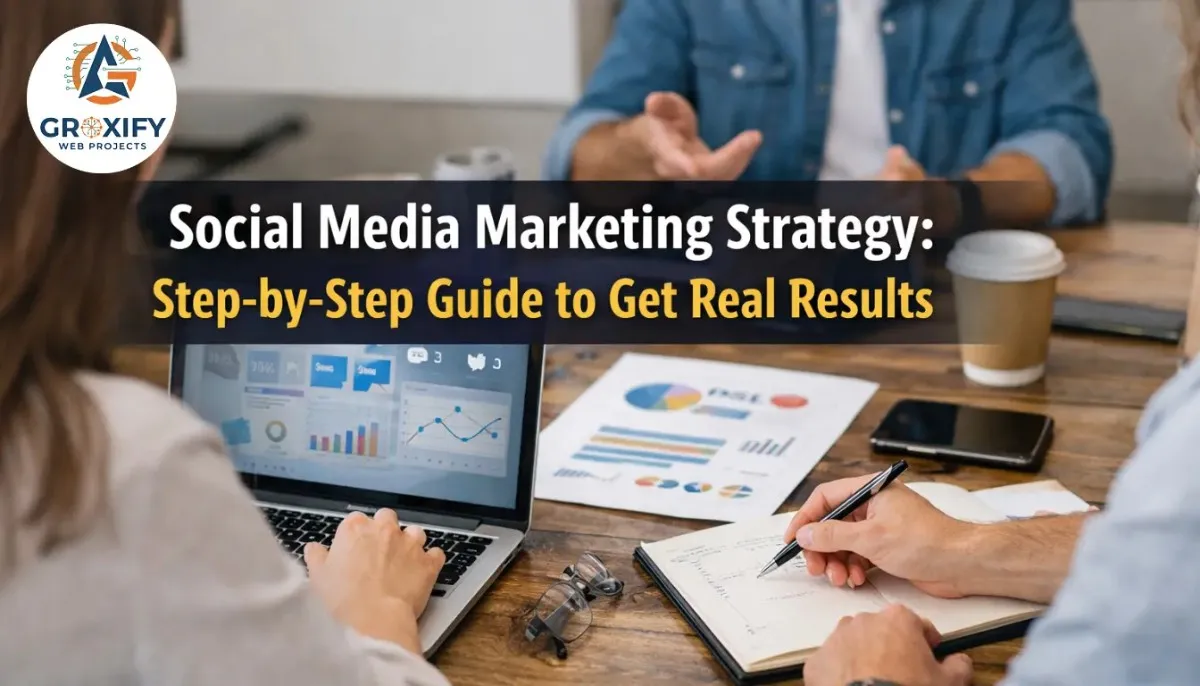
What is a Social Media Marketing Strategy
A social media marketing strategy is a clear plan that defines how a business uses social platforms to achieve specific goals. These goals can include brand awareness, lead generation, sales, or customer engagement.
It is not just about posting regularly. A proper strategy answers key questions like what to post, where to post, when to post, and why it matters. It connects your content directly to business outcomes instead of random activity.
A strong social media marketing strategy usually includes target audience details, content themes, platform selection, posting schedule, and performance tracking. For example, a startup may focus on Instagram for visual reach, while a B2B company may rely more on LinkedIn for leads.
In practical work, businesses that follow a defined strategy see more consistent growth compared to those posting without a plan.
In simple terms, it is a roadmap that guides every action you take on social media so your efforts actually deliver results.
Why Social Media Marketing Strategy Matters for Business
Without a clear strategy, social media turns into random posting that rarely brings results. A proper social media marketing strategy gives direction, so every post, campaign, and interaction serves a purpose.
It helps businesses focus on the right audience instead of trying to reach everyone. When you know who you are targeting, your content becomes more relevant, which improves engagement and conversions.
A structured social media marketing plan also saves time and budget. Instead of guessing what might work, you follow a defined approach backed by data and consistency. This reduces wasted effort and improves return on investment.
For businesses, it also builds brand identity. Consistent messaging, visuals, and tone make your brand recognizable across platforms. Over time, this creates trust, which directly impacts buying decisions.
In practical work, companies that treat social media as a strategic channel, not just a posting platform, see better lead quality and stronger customer relationships. That is why having a strategy is not optional anymore, it is essential.
How Does a Social Media Marketing Strategy Work
A social media marketing strategy works like a system, not a one-time task. It follows a clear cycle where each step builds on the previous one to drive consistent results.
It starts with setting goals. These can be traffic, leads, sales, or brand awareness. Without this, content has no direction. Next comes understanding your audience, what they like, where they spend time, and what problems they want solved.
Then you choose the right platforms and create content around specific themes. This could be educational posts, product highlights, or short videos. A posting schedule keeps everything consistent instead of random.
After publishing, the focus shifts to engagement and tracking. You reply to comments, monitor performance, and study what works. Metrics like reach, clicks, and conversions guide your next move.
Most importantly, the strategy is not fixed. It improves over time. Based on data, you adjust content, timing, and platforms.
In practical work, this cycle of planning, posting, analyzing, and improving is what turns social media into a reliable growth channel rather than just an activity.
Types of Social Media Marketing Strategies
There is no single social media marketing strategy that works for every business. The right approach depends on your goals, audience, and industry. Most businesses use a mix of strategies instead of relying on just one.
1. Content Marketing Strategy
This focuses on sharing useful and engaging content like tips, tutorials, and insights. It helps build trust and keeps your audience coming back regularly.
2. Brand Awareness Strategy
Here the goal is visibility. Businesses post consistently to stay in front of their audience using reels, short videos, and trending formats.
3. Lead Generation Strategy
This approach is designed to collect leads through forms, landing pages, or direct messages. It often includes offers like free resources or consultations.
4. Sales-Driven Strategy
Content is focused on promoting products or services directly. This includes offers, product demos, testimonials, and limited-time deals.
5. Community Building Strategy
This strategy focuses on engagement. Replying to comments, starting conversations, and building a loyal audience is the priority here.
In practical work, successful brands combine these strategies. For example, they may use content for trust, awareness for reach, and lead generation for conversions.
Benefits of Social Media Marketing for Business
Social media marketing gives businesses a direct way to reach and connect with their audience without relying fully on ads or middle channels. When done with a clear social media marketing strategy, the impact becomes consistent and measurable.
One of the biggest benefits is visibility. Platforms like Instagram, LinkedIn, and Facebook allow businesses to stay in front of potential customers daily. This repeated exposure builds familiarity, which often leads to trust over time.
It also improves customer engagement. People can comment, message, and interact instantly. This two-way communication helps businesses understand customer needs better and respond quickly.
Another key advantage is lead generation. A well-planned social media marketing plan can bring in inquiries, website visits, and conversions without heavy spending. Small businesses especially benefit because the entry cost is low.
Social media also strengthens brand identity. Consistent content, tone, and visuals make your business recognizable.
In practical work, businesses that use social media actively often see better customer retention and faster feedback, which helps them improve products and services quickly.
Common Mistakes in Social Media Marketing Strategy
Many businesses use social media regularly but still don’t see results. The reason is usually not effort, but mistakes in how the social media marketing strategy is planned and executed.
One common mistake is posting without a clear goal. If content is not linked to awareness, leads, or sales, it becomes noise. Another issue is trying to be present on every platform. This spreads effort too thin and reduces impact.
Inconsistent posting is also a major problem. Posting actively for a few days and then disappearing breaks audience trust and reduces reach over time.
Some businesses focus only on selling. Constant promotional posts push people away. Social media works better when value comes first and selling is balanced.
Ignoring data is another big gap. Without tracking performance, you cannot improve. Metrics like engagement, clicks, and conversions help refine your social media marketing plan.
What to avoid:
- Posting without strategy
- Targeting everyone instead of a clear audience
- Ignoring comments and messages
- Copying competitors without understanding context
- Expecting instant results
In practical work, fixing these basic mistakes often improves results faster than trying new tactics.
Cost of Social Media Marketing and Budget Planning
The cost of a social media marketing strategy depends on how you plan to execute it. Some businesses start with zero budget using organic content, while others invest heavily in ads, tools, and teams.
At a basic level, costs include content creation, design, tools, and time. If you handle it yourself, the main investment is effort. But as you grow, you may need designers, video editors, or agencies. For example, many startups working with teams like Groxify Web Projects usually move from DIY to structured execution as they scale.
Paid advertising is another major cost. Platforms like Facebook and Instagram allow flexible budgets. You can start small, even ₹200–₹500 per day, and increase based on results.
Here is a simple breakdown:
| Component | Cost Range |
| Content creation | Low to Medium |
| Tools (scheduling, analytics) | Free to ₹5,000/month |
| Ads budget | Flexible (₹200/day to high scale) |
| Agency/Team | Medium to High |
Budget planning should always match your goals. If your goal is brand awareness, content may be enough. If your goal is leads or sales, you will likely need ad spend.
In practical work, consistent small budgets perform better than irregular high spending.
How to Choose the Right Social Media Marketing Plan
Choosing the right social media marketing plan depends on your business goals, audience, and available resources. There is no universal plan, so the focus should be on what actually works for your situation.
Start by defining your primary goal. If you want visibility, focus on content and reach. If your goal is leads or sales, your plan should include funnels, offers, and ad campaigns. Clear goals make decisions easier.
Next, understand where your audience spends time. For example, LinkedIn works better for B2B, while Instagram and YouTube are stronger for visual and consumer-focused content. Choosing the wrong platform wastes effort.
Content capability also matters. If you can create videos consistently, short-form video should be part of your plan. If not, focus on simple formats like posts or carousels.
Budget is another factor. A small budget may rely more on organic growth, while higher budgets allow faster results through ads and tools. Many growing businesses partner with teams like Groxify Web Projects to structure their execution properly.
Key things to check:
- Clear business goal
- Right platform selection
- Content consistency capability
- Budget alignment
- Tracking and improvement plan
In practical work, the best plan is not the most complex one, it is the one you can execute consistently.
Future Trends in Social Media Marketing
Social media marketing is changing fast. What worked a year ago may not work today. To stay relevant, your social media marketing strategy needs to adapt to how people consume content and how platforms evolve.
One major shift is the rise of AI in content creation and analysis. Businesses now use AI for ideas, captions, and performance tracking, but the real advantage comes from combining AI with human creativity. Purely automated content often feels generic.
Another big trend is the focus on authenticity. Audiences prefer real, unpolished content over perfect posts. Behind-the-scenes videos, founder stories, and raw content are getting better engagement.
Short-form video continues to dominate. Reels, TikTok, and YouTube Shorts are now key for reach and visibility. At the same time, long-form content is making a comeback for deeper engagement.
Social platforms are also becoming search engines. People now search directly on Instagram or YouTube, so content needs to be optimized with keywords and clear titles.
Finally, community matters more than followers. Brands focusing on smaller, engaged audiences often perform better than those chasing viral reach.
In practical work, businesses that adapt early to these shifts usually gain better reach, lower costs, and stronger audience trust.
Key Takeaways
- A social media marketing strategy gives direction, not just activity
- Clear goals and audience focus improve results faster
- Consistency matters more than posting frequently for a short time
- Mixing content, engagement, and promotion works better than only selling
- Budget should match your objective, not guesswork
- Tracking and improving regularly is what drives long-term growth
FAQs
It is a plan that defines how a business uses social media to achieve goals like awareness, leads, or sales. It includes content, platforms, timing, and tracking to ensure consistent and meaningful results.
A strategy is the overall direction, while a plan is the execution. The plan includes specific actions like posting schedules, content ideas, and campaigns based on the strategy.
It depends on your audience. LinkedIn works well for B2B, while Instagram, YouTube, and Facebook are better for broader or consumer-focused audiences. The right platform is where your audience is active.
You can start with a low budget or even zero using organic content. For faster results, businesses usually invest in ads, starting from small daily budgets and scaling based on performance.
Organic growth may take a few months, while paid campaigns can show quicker results. Consistency and proper targeting play a big role in how fast you see outcomes.
Yes, social media offers low-cost access to a large audience. With a clear strategy, even small businesses can generate leads, build brand awareness, and compete effectively.
Content that is useful, relatable, or engaging performs best. This includes short videos, tips, tutorials, and real-life insights rather than only promotional posts.
Consistency matters more than frequency. Posting 3–5 times per week is a good starting point, but it should match your capacity to maintain quality.
Not always. Organic content can build reach over time, but ads help speed up results, especially for lead generation and sales-focused campaigns.
Yes, many businesses start this way. As you grow, you may need tools or expert support from teams like Groxify Web Projects to scale efficiently.
Conclusion
A social media marketing strategy is not just about being active online. It is about being intentional with every post, every platform, and every effort you put in.
When you have a clear plan, social media becomes a reliable channel for growth, not a guessing game. You understand what to post, who you are targeting, and how your efforts connect to real business results.
The key is to keep things simple and consistent. Focus on your audience, create useful content, track what works, and improve over time. You don’t need a perfect strategy from day one, but you do need a clear direction.
In practical work, businesses that stay consistent and adapt based on data are the ones that grow steadily.
Start with a basic plan, refine it as you learn, and treat social media as a long-term investment rather than a quick win.

Rohit Singh is the Founder of GROXIFY WEB PROJECTS LLP with many years of hands-on experience in digital marketing, including SEO, PPC, social media, email marketing, content writing, and WordPress development. He has worked with global clients across industries and helped businesses achieve 5x–10x revenue growth through data-driven strategies and practical execution. Rohit actively manages digital teams, builds business strategies, plans marketing systems, and oversees execution to drive consistent traffic, leads, and long-term business growth.