You send an email. Someone reads it. They click. They buy. That is the basic loop behind email marketing, and it has been working since the internet was young.
But if you have been hearing the term and still feel a bit fuzzy on what email marketing actually means, you are not alone. Most guides either get too technical too fast or stay so surface-level that you finish reading and still feel lost.
This guide covers what it is, how it works, what types exist, which platforms people actually use, where it fits into a real business, and whether it makes sense for you. By the end, you will not need to read another article on this topic.
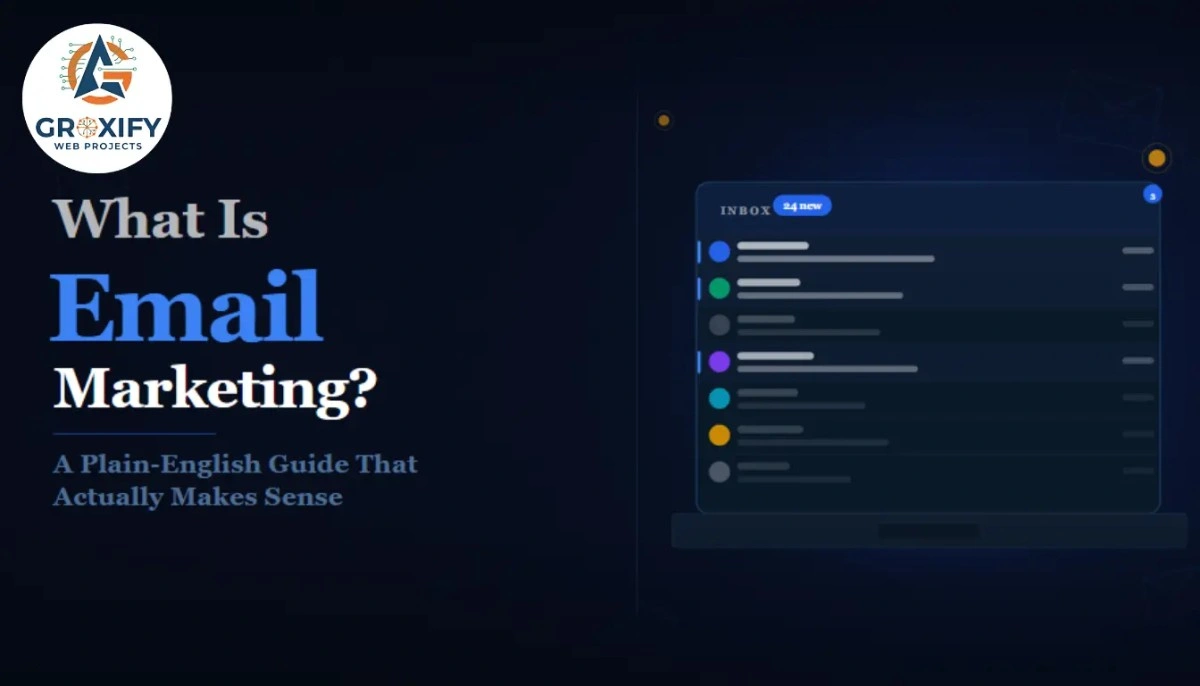
What Is Email Marketing?
Email marketing is the practice of sending targeted emails to a list of people who have given you permission to contact them, with the goal of building a relationship, promoting something, or driving a specific action.
That word “permission” matters more than most beginners realize. Unlike spam, which is unsolicited email nobody asked for, email marketing only works when someone has opted in. Opted in means they signed up through a form, checked a box, or deliberately subscribed to hear from you.
Here is a simple way to picture it. You run a small bakery. A customer visits and says, “Text me when you have new flavors.” Now imagine that but through email, and scaled to hundreds of customers. That is email marketing at its most basic.
Now add software that manages all those contacts, schedules your emails, automates follow-ups, and tracks who opened what. That is what actual businesses are doing right now.
How Does Email Marketing Work?
The flow is simpler than it sounds:
- Someone finds you online, reads your content, or sees your offer.
- They sign up through a form, handing over their email address.
- An email marketing platform stores that contact and adds them to your list.
- You send them emails, either manually or through pre-built automated sequences.
- They open, read, and (ideally) take some action.
- You look at the data and improve your next email based on what worked.
Three things power the whole system: a list of subscribers, a platform to manage and send emails, and the actual emails. That is it.
The technology is not the hard part. Knowing what to send and when is where most people get stuck.
Types of Email Marketing Campaigns
Not every marketing email looks the same or does the same job. Here are the main types you will come across:
Newsletter emails go out on a regular schedule, typically weekly or monthly. They keep your audience updated, share useful content, and build familiarity over time. Think of them like a magazine the reader personally chose to receive.
Promotional emails are built around a specific offer. A product launch, a limited discount, a flash sale. These are direct and action-focused. They work best when they are not every email you send.
Welcome emails are sent automatically the moment someone subscribes. This first email sets the tone for everything that follows. Businesses that send a warm, useful welcome email see much higher engagement long-term.
Transactional emails are triggered by something the user did. Order confirmation, password reset, shipping update. These are not purely “marketing” but they are part of the email experience and should never be treated as afterthoughts.
Drip campaigns (also called automated sequences) are a series of emails sent over time based on behavior. Someone downloads your free guide. Over the next week, they get a series of emails building on that topic. Each one earns the next.
Re-engagement emails target subscribers who have gone quiet, meaning people who have not opened anything from you in a while. You send something specifically designed to pull them back, or you clean them off the list if they do not respond.
Most businesses run a mix of all of these at once. Each type serves a different role in the relationship.
Why Email Marketing Still Works
Social media posts disappear in a feed in seconds. Ads get scrolled past. But an email sits in someone’s inbox until they deal with it. That is a fundamentally different kind of attention.
The inbox is personal. People open it with intention. When an email arrives from a sender they trust, they actually read it. That is not guaranteed with any other channel.
There is also a list ownership angle that does not get talked about enough. Your social media followers are borrowed. The platform can change its algorithm tomorrow and your reach collapses overnight. Your email list belongs to you. No algorithm controls who sees it.
In terms of ROI (return on investment, meaning how much revenue you generate for every rupee or dollar you spend), email marketing consistently outperforms most other channels. The actual numbers vary by industry and audience, but the pattern holds across categories: email converts better than cold social ads and at a lower cost per result.
Here is the honest part. It only works if your emails are actually good. A bad email gets ignored. A pushy email gets unsubscribed. The channel works. The message still has to earn its place in that inbox.
What Is Email Marketing Used For? Real Examples
The best way to understand what email marketing looks like in practice is to see it across different types of businesses:
An e-commerce brand sends order confirmations, shipping updates, product recommendations based on past purchases, and promotional campaigns during sale seasons. Email handles a huge chunk of their repeat revenue.
A freelance designer builds a small list of past clients and warm leads. Every few weeks they send a short email sharing recent work, a quick design tip, or a note about current availability. When a project need comes up, that freelancer is already in the client’s inbox.
An online course creator uses a drip campaign. New subscribers get a welcome email, then a series of emails over the next week teaching something genuinely useful, followed by an invitation to join the paid course.
A SaaS company (SaaS stands for Software as a Service, meaning software sold on a subscription model like Canva or Notion) uses email to onboard new users, reduce churn (churn means the rate at which customers cancel), and keep users informed about new features.
A local restaurant sends monthly emails with seasonal menu updates, special events, and exclusive offers for subscribers. Customers who opted in feel like insiders.
The use case changes. The strategy stays the same: stay present, stay useful, build trust over time.
Email Marketing Platforms Worth Knowing
A platform is the software that manages your contact list, lets you design and send emails, builds automations, and tracks your results. Once your list grows beyond a few dozen people, you cannot handle this manually.
Here is a practical comparison of the most commonly used options:
| Platform | Best For | Free Plan? |
|---|---|---|
| Mailchimp | Beginners, small businesses | Yes |
| ConvertKit | Creators, bloggers, freelancers | Yes |
| ActiveCampaign | Businesses that need complex automation | No |
| Klaviyo | E-commerce brands | Yes |
| Brevo (formerly Sendinblue) | Budget users, transactional email volume | Yes |
All of them handle the basics: contact management, email design, automated sequences, and basic analytics like open rates and click rates.
The right pick depends on your situation. If you are just starting, the free tier of Mailchimp or ConvertKit is more than enough. If you run an online store, Klaviyo is built specifically for that workflow. If you need complex behavioral automation, ActiveCampaign is what most teams reach for.
Do not overthink the platform choice. Start with whatever is free and simple. You can switch later without much friction.
What Actually Makes an Email Campaign Work
A lot of beginners think they need a big list before email marketing becomes worth doing. They do not. A small, engaged list beats a massive, unresponsive one every time.
Here is what actually drives results:
A real reason to subscribe. This is called a lead magnet, meaning a free resource or offer that gives someone a reason to hand over their email address. A free checklist, a discount code, a mini guide, a short course. Whatever is genuinely useful to the specific person you want to reach.
A consistent sending schedule. Subscribers forget fast. If you go quiet for two months and then show up with a sales email, the results will reflect that gap. Even once a month is enough if you stay consistent.
Emails that sound human. The biggest mistake businesses make is writing emails that read like press releases. People respond to people. Write as if you are talking to one person, not broadcasting to a crowd.
Tracking what matters. The numbers to watch: open rate (the percentage of recipients who opened the email), click-through rate (the percentage who clicked a link inside), and unsubscribe rate (how many people left). These three numbers tell you almost everything about what needs to change.
Most email marketing problems are not platform problems or list size problems. They are content problems. Fix the emails. The rest follows.
Common Mistakes That Hurt Email Campaigns
A few patterns show up again and again in campaigns that underperform:
- Buying an email list. This is the fastest way to get flagged as spam and damage your sender reputation, which is the score email providers use to decide whether your emails land in inboxes or spam folders. Only send to people who opted in.
- Making every email a sales pitch. If subscribers feel like they only hear from you when you want something, they tune out or unsubscribe. Lead with value. Promotions land better when they follow genuine usefulness.
- Ignoring mobile. Most emails are opened on phones. An email that looks broken on a small screen loses a majority of its audience before they read a word.
- Asking people to do five things. Each email should have one clear call to action (the specific thing you want the reader to do next). One. Not three links and two offers. One direction.
- Never testing anything. A/B testing means sending two versions of an email to different segments of your list to see which performs better. Even a different subject line can swing open rates significantly. Most platforms make this a one-click setup.
These are all fixable. None of them require a bigger budget or a bigger team.
Is Email Marketing Right for You?
If you have a business, a service, content, or any kind of audience you want to build a longer relationship with, the answer is almost always yes.
But let us be honest about where it fits. Email marketing works best when you have something worth saying on a regular basis, when your relationship with customers does not end at the first purchase, and when you are willing to write emails people actually want to open.
It is less immediate than paid ads. It takes time to build a list. The payoff is not always visible in the first month. But the businesses that stick with it tend to build something that keeps generating results without ongoing ad spend propping it up.
At Groxify Web Projects, we have seen businesses with a few hundred subscribers generating consistent monthly revenue through email, while others with tens of thousands of contacts get almost nothing because the emails were never given real thought.
The list size is not what decides results. The quality of what you send is.
Putting It Together
So, what is email marketing? It is a direct, owned channel where you build a list of people who want to hear from you, and then you show up for them consistently with something worth reading.
Start small. Build your list the right way. Send emails that would make you want to stay subscribed if you received them. That is the entire strategy. Everything else is just tools and timing.
If you are ready to go further, start by picking one platform from the list above, setting up a simple sign-up form, and writing your first welcome email. That one email is where it all begins.
FAQ
Email marketing is when a business sends emails to a list of people who signed up to hear from them. The goal can be to share useful content, promote a product, or build a relationship. It is permission-based, meaning subscribers chose to receive your emails.
Most email marketing platforms offer free plans that cover a few hundred to a few thousand subscribers. Mailchimp, ConvertKit, Klaviyo, and Brevo all have free tiers. You can start and run a basic email marketing setup without spending anything until your list grows.
Open rate is the percentage of recipients who opened your email. A rate between 20 and 40 percent is generally considered healthy, though this varies by industry. Niche audiences and smaller, more engaged lists tend to have higher open rates than broad or purchased lists.
You do not need a full website, but you do need somewhere to host a sign-up form, even if it is a simple landing page. Most email marketing platforms let you create a hosted sign-up page directly inside the platform without any separate website setup.
They serve different purposes. Email reaches people who already opted in, making it better for conversions and relationship building. Social media is better for discovery and reaching new audiences. Most businesses use both, with email handling retention and social handling growth.
Mailchimp or ConvertKit are the most beginner-friendly options. Both have free plans, clean interfaces, and enough features to run a solid email strategy. Mailchimp suits small businesses. ConvertKit is more tailored to content creators, bloggers, and freelancers.
Spam is unsolicited email sent without permission. Email marketing is only sent to people who explicitly signed up or opted in. Spam is also typically illegal under laws like GDPR and CAN-SPAM. Legitimate email marketing always includes an unsubscribe option and a real sender identity.
Yes, and consistently so. Inbox attention is more personal than social media feeds, lists are owned by the business rather than rented from a platform, and email continues to convert at higher rates than most other channels. The channel has not declined. Poor execution is what makes it feel outdated.
Start with a lead magnet, something genuinely useful you offer for free in exchange for an email address. Then add a sign-up form to your website or landing page. Promote the opt-in through your social media, content, and anywhere your audience already finds you. Focus on quality over speed.
Once a week is a good starting rhythm for most businesses. Once a month is the minimum if you want to stay remembered. Daily works only in specific contexts like a short-term challenge or launch sequence. Consistency matters more than frequency. A reliable monthly email beats an irregular weekly one.

Rohit Singh is the Founder of GROXIFY WEB PROJECTS LLP with many years of hands-on experience in digital marketing, including SEO, PPC, social media, email marketing, content writing, and WordPress development. He has worked with global clients across industries and helped businesses achieve 5x–10x revenue growth through data-driven strategies and practical execution. Rohit actively manages digital teams, builds business strategies, plans marketing systems, and oversees execution to drive consistent traffic, leads, and long-term business growth.