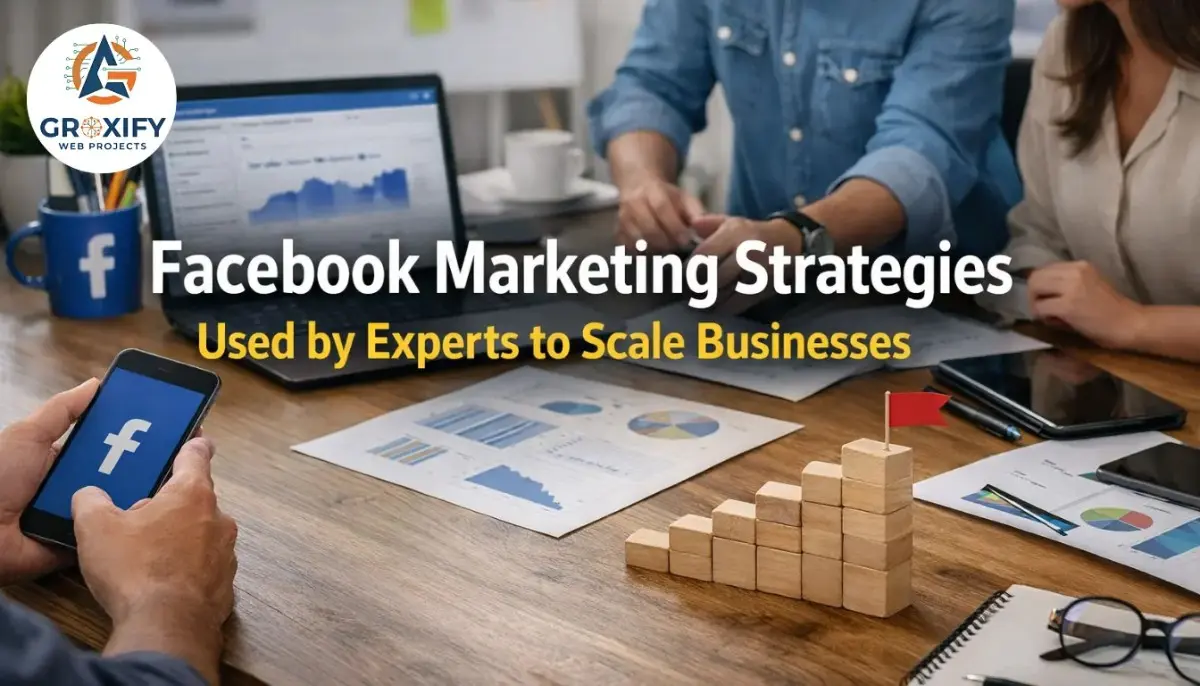
What is Facebook Marketing and Why It Matters
Facebook marketing means using the Facebook platform to promote your business through content, ads, and community building. It includes running facebook ads, managing pages, posting regularly, and engaging with your audience.
Table of Contents
In simple terms, it is a mix of paid and organic strategies to reach the right people and turn them into customers.
In this matters more than ever because the platform has shifted from simple posting to a data-driven ecosystem powered by Meta Platforms. Now, success depends on understanding audience behavior, content relevance, and smart ad targeting.
What changed is control. Organic reach is lower, but ad targeting is more precise. Also, video content and AI-based recommendations dominate visibility.
For businesses, this creates a clear opportunity. Even small brands can compete if they combine organic trust-building with smart paid campaigns.
In practical campaigns, this becomes the turning point between wasting budget and getting real results.
That is why understanding Facebook marketing properly is no longer optional.
How Do Facebook Ads Work and What Changed in Meta Ads
facebook ads work on a simple idea. You pay to show your content to a specific audience based on their interests, behaviour, and demographics. These ads run across Facebook, Instagram, and other placements under Meta Platforms.
You start by choosing an objective like traffic, leads, or sales. Then you define your audience, set a budget, and upload your creative. Meta’s system then delivers your ad to people most likely to take action.
What changed in recent years is how much control has shifted to automation. Earlier, advertisers manually selected targeting and placements. Now, Meta uses AI to optimise delivery, often performing better than manual setups.
Another big shift is tracking. Due to privacy updates, data is less direct. So Meta relies more on predictive modelling rather than exact user tracking.
Creative also matters more now. The system rewards ads that people engage with quickly. So strong visuals and clear messaging outperform complex targeting.
For most businesses, the winning approach today is simple: clear goal, broad audience, and high-quality creatives.
This is what actually improves results in modern Meta ads.
What Are the Types of Facebook Ads You Should Use
Choosing the right type of facebook ads is not about using everything. It is about picking what matches your goal. Each format works differently, and using the wrong one often wastes budget.
Here are the main types that actually work:
1. Image Ads
Simple and effective. Best for quick promotions or offers.
Works well when your message is clear and visual.
2. Video Ads
High engagement format. Performs best for storytelling, demos, or explaining value.
Short videos usually get better results now.
3. Carousel Ads
Multiple images or videos in one ad.
Great for showcasing products, features, or steps.
4. Lead Ads
Used to collect user details directly inside Facebook.
Best for service businesses and local leads.
5. Conversion Ads
Focused on driving sales or actions on your website.
Works best when you already have some data or traffic.
6. Retargeting Ads
Show ads to people who already interacted with your business.
This is where most conversions happen.
In real campaigns, mixing 2–3 types gives better results than relying on one.
So instead of testing everything randomly, choose based on your goal. That is what improves performance.
How to Grow a Facebook Page Organically
Organic growth on Facebook is not about posting more. It is about posting what the algorithm wants to push and what people actually engage with.
In reach depends mainly on content interaction. If your post gets quick engagement, it spreads. If not, it dies fast.
Start with content type. Short videos, reels, and relatable posts perform far better than plain text. People scroll fast, so your first 2 seconds matter the most.
Consistency also plays a role. Posting 3–5 times a week keeps your page active without overwhelming your audience.
Focus on engagement, not just content. Ask simple questions, reply to comments quickly, and create posts that invite reactions. This signals quality to the algorithm.
Here are a few practical moves that work:
- Post short-form videos regularly
- Use simple, clear captions
- Engage in comments within the first hour
- Share relatable or problem-solving content
- Repost top-performing content in new formats
Also, collaborations help. Partnering with similar pages increases visibility without spending money.
In real scenarios, pages that focus on engagement grow faster than pages that just post.
That is why organic growth today is more about connection than content quantity.
What Are the Benefits of Facebook Marketing for Businesses
facebook marketing gives businesses a mix of reach, targeting, and conversion opportunities that few platforms can match. It works for both small local brands and large companies because of its flexibility.
The biggest benefit is audience targeting. With Meta Platforms tools, you can reach people based on interests, behaviour, and even past interactions. This reduces wasted effort and improves results.
Another key advantage is cost control. You can start small, test what works, and scale only when you see performance. This makes it suitable even for tight budgets.
It also supports full funnel marketing. You can build awareness, generate leads, and drive sales all within the same system using social media ads.
Brand visibility improves quickly. Regular content and ads keep your business in front of potential customers, which builds familiarity and trust over time.
You also get measurable results. Every click, view, and conversion can be tracked, which helps in making better decisions.
For most businesses, this becomes the difference between guessing and growing with clarity.
That is why Facebook marketing remains a strong channel even.
What Mistakes to Avoid in Facebook Ads and Organic Growth
Most failures in facebook marketing do not happen because the platform does not work. They happen because of wrong execution.
One common mistake is targeting too narrowly in facebook ads. In Meta’s system performs better with broader audiences. Over-filtering limits reach and increases costs.
Another issue is weak creatives. Many businesses focus too much on targeting but ignore visuals and messaging. If your ad does not grab attention in the first few seconds, it will not perform.
In organic growth, inconsistency is a major problem. Posting randomly or disappearing for weeks kills momentum. The algorithm favors regular activity.
Ignoring engagement is also a mistake. Not replying to comments or messages reduces trust and lowers reach over time.
Here are a few more mistakes to avoid:
- Running ads without a clear goal
- Testing too many things at once
- Expecting instant results
- Copying competitors without understanding strategy
- Not tracking performance properly
In practical campaigns, fixing these small mistakes often improves results faster than increasing budget.
That is why focusing on execution details matters more than chasing shortcuts.
How Much Does Facebook Advertising Cost and Is It Worth It
The cost of facebook ads is not fixed. It depends on your audience, competition, ad quality, and objective. That is why two businesses can run similar campaigns and get very different results.
In most advertisers pay based on clicks (CPC), impressions (CPM), or conversions. For Indian markets, average costs usually fall in this range:
| Type | Average Cost (India) |
| Cost per Click (CPC) | ₹5 – ₹25 |
| Cost per 1000 Impressions (CPM) | ₹80 – ₹300 |
| Cost per Lead | ₹50 – ₹500+ |
These numbers are not fixed. If your targeting or creatives are weak, costs go higher.
What matters more is return, not cost. A ₹500 lead is expensive if it does not convert. But the same lead is cheap if it brings a ₹5000 sale.
This is where Meta Platforms optimisation plays a role. Better creatives and proper campaign structure reduce cost over time.
For small businesses, starting with ₹300–₹500 per day is enough to test. Once you see results, you scale gradually.
In real campaigns, businesses that focus on return on investment grow faster than those chasing cheap clicks.
So yes, Facebook advertising is worth it, but only when strategy and execution are aligned.
How to Choose the Right Facebook Marketing Strategy for Your Business
Choosing the right facebook marketing strategy is not about copying what others are doing. It depends on your business goal, budget, and how your audience behaves.
Start with clarity. Ask one simple question: do you want awareness, leads, or sales? Your entire approach changes based on this. For example, new businesses should focus more on visibility, while established ones can push conversions using facebook ads.
Next comes audience understanding. Broad targeting works better today, but your messaging must match your audience’s problem. If the message is unclear, even the best targeting fails.
Content and ads should work together. Organic content builds trust, while paid ads bring reach and speed. Ignoring one side reduces overall performance.
A simple strategy structure that works:
- Awareness content (videos, reels)
- Engagement posts (questions, relatable content)
- Retargeting ads for interested users
- Conversion ads for final action
Budget also matters. Start small, test properly, then scale what works. Avoid jumping into high spending without data.
In real campaigns, clarity of goal matters more than complexity of strategy.
That is why the right strategy is always simple, focused, and consistent.
What Are the Latest Trends and Secret Hacks in Facebook Marketing
In facebook marketing is no longer about tricks or shortcuts. It is about understanding how Meta Platforms actually delivers content and ads now.
The biggest shift is simple: AI and user behaviour control everything.
Key Trends You Need to Know
1. AI-driven ads are taking over
Meta is heavily pushing automation. Campaign setup, targeting, and optimisation are now handled by AI systems.
This means your role is less technical and more strategic.
2. Short-form video dominates
Reels and short videos get the highest engagement. People scroll fast, so quick content wins.
3. Broad targeting works better
Detailed targeting is fading. Meta’s system finds the right audience if you give it enough data.
4. Creative is the new targeting
Your ad content decides success more than audience filters. Good messaging pulls the right users automatically.
5. Social commerce is growing fast
Shopping features, affiliate tools, and in-app buying are expanding rapidly.
Practical “Hidden” Hacks That Actually Work
These are not tricks. These are execution advantages:
- Start ads with a strong hook in first 2 seconds
- Use simple, real-looking creatives (not overly polished)
- Test 2–3 creatives, not 10 at once
- Focus on engagement signals, not just clicks
- Retarget video viewers for better conversions
Also, data matters more now. Clean tracking and proper setup improve performance significantly.
In real campaigns, small improvements in creative and data outperform complex strategies.
That is why in winning on Facebook is less about hacking the system and more about working with it.
Key Takeaways from Facebook Marketing
- facebook marketing works best when you combine organic content with paid ads
- Strong creatives matter more than complex targeting in facebook ads
- Broad audience targeting is now more effective than narrow filtering
- Consistency and engagement drive organic growth on Facebook
- Cost depends on strategy, but return depends on execution quality
- Simple, goal-focused campaigns perform better than complicated setups
This is what actually improves results in real scenarios.
FAQs on Facebook Marketing
It is the process of promoting your business using Facebook through content, ads, and engagement to reach and convert your target audience.
Yes, it remains effective because of strong targeting and massive user base, especially when combined with smart ad strategies and engaging content.
You can start with ₹300–₹500 per day for testing. Once you see results, increase budget gradually based on performance.
Video ads and retargeting ads perform best in most cases because they attract attention and convert warm audiences.
Yes, but it takes time. Consistent posting, engagement, and valuable content are required for organic growth.
Ads can show initial results within a few days, but consistent performance usually takes 2–4 weeks of testing and optimisation.
Running ads without a clear goal and ignoring creative quality, which leads to poor performance and wasted budget.
It depends on your audience. Facebook is strong for detailed targeting and conversions, while other platforms may be better for reach or trends.
Not always. You can generate leads directly on Facebook, but a website helps in scaling and building long-term trust.
Focus on better creatives, test a few variations, use retargeting, and let Meta Platforms optimisation work with enough data.
Conclusion
Facebook marketing is not complicated, but it is different. Success now depends less on tricks and more on clarity, consistency, and smart execution.
If you understand your goal, create strong content, and use ads strategically, results become predictable.
For businesses working with teams like Groxify Web Projects, the focus is always on combining data with simple strategies that actually convert.
That is what makes Facebook marketing work today.

Rohit Singh is the Founder of GROXIFY WEB PROJECTS LLP with many years of hands-on experience in digital marketing, including SEO, PPC, social media, email marketing, content writing, and WordPress development. He has worked with global clients across industries and helped businesses achieve 5x–10x revenue growth through data-driven strategies and practical execution. Rohit actively manages digital teams, builds business strategies, plans marketing systems, and oversees execution to drive consistent traffic, leads, and long-term business growth.