Why Off Page SEO Still Matters in Even After AI Search Changes
Many founders and business owners ask me one common question now. If Google AI Overview is answering everything directly, does off page SEO still matter? Fair question. I also had the same discussion with a startup founder from Laxmi Nagar last month after his traffic dropped even though his website was technically strong.
Table of Contents
What I am seeing is simple. Google still depends on trust signals. AI can summarise content. But it still checks who the internet trusts. That trust mostly comes from external links in SEO, brand mentions, and real authority signals outside your website.
For example, we worked with a service business near Connaught Place. Their on-page SEO was good. But rankings improved only after we started authority link building and niche article submission work. Within about 10–14 weeks their keyword positions moved from page 3 to page 1.
If you are:
- just learning SEO
- running a startup
- comparing agencies
- trying to grow organic leads
Then understanding off page SEO is still necessary. AI changed search display. It did not remove reputation signals. Off page SEO is still how Google measures real credibility.
What Is Off Page SEO Actually (Simple Explanation With Real Examples)
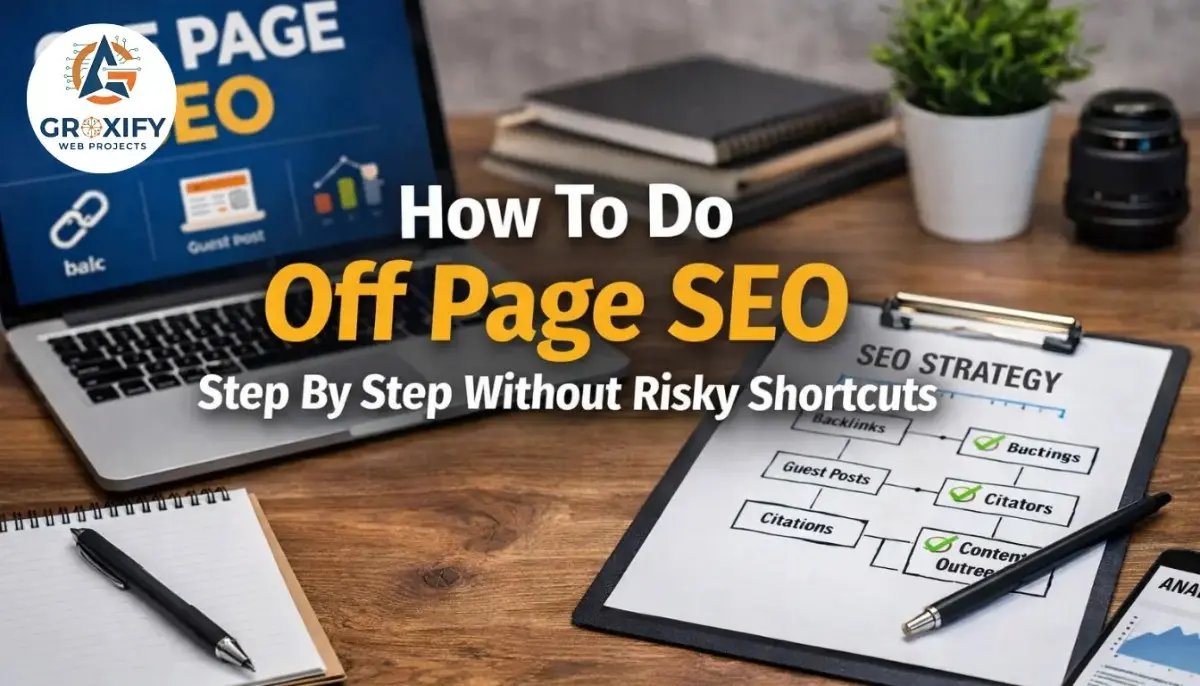
In simple words, off page SEO means everything that happens outside your website to improve your Google trust. Many beginners think SEO means only website changes. In real projects, that is only half the work.
Off page SEO mainly includes:
- Getting quality external links in SEO from relevant websites
- Brand mentions on blogs and directories
- Article submission on niche platforms
- Blog commenting in SEO (only where discussion is real)
- PR mentions and business listings
- Social signals and community visibility
I usually explain this with a simple example I share with clients in Delhi NCR.
If your website is like a shop in Karol Bagh, off page SEO is like other shop owners recommending you. The more trusted people talk about you, the more customers trust you.
We guided one training institute near Rajouri Garden. Their website was decent but unknown. After consistent article submission and industry mentions, enquiries improved because Google started seeing them as a referenced business, not just another website.
Key Takeaways
- On-page SEO builds your website
- Off page SEO builds your reputation
- Google ranks reputation, not just content
- Real authority comes from who mentions you
Which Off Page SEO Techniques Still Work in (And Which Are Dead)
This is where most confusion happens. Many people still follow 2018 link building lists. Then they wonder why rankings do not move. What is working today is very different from what worked earlier.
From what we are actively executing at Groxify Web Projects across Delhi businesses from Nehru Place to Noida Sector 62, the difference is very clear. Google now checks relevance and trust more than quantity.
Here is a practical comparison based on what is giving results now:
| Still Working Techniques | Techniques Losing Value |
| Niche relevant guest posting | Bulk directory submissions |
| High quality article submission | Spun article posting |
| Digital PR mentions | Random profile backlinks |
| Founder branding & authority posts | Forum spam links |
| Real blog commenting in SEO discussions | Automated blog comments |
| Local citations with real data | Fake location listings |
| Partnerships & collaborations | Paid link farms |
| Community participation (Reddit, Quora type discussions) | Private Blog Networks (PBNs) |
Techniques giving steady results right now
What we normally prioritise when building off page SEO:
- Contextual backlinks from relevant industry blogs
- Founder interviews and expertise posts
- Strategic external links in SEO from authority sites
- Local SEO citations with consistent NAP details
- Selective article submission on trusted platforms
- Relationship based link building instead of buying links
Practices we usually advise clients to avoid
These still look attractive because they are cheap. But recovery later becomes difficult:
- Buying 500 backlinks packages
- Fiverr bulk link gigs
- Comment spam tools
- PBN shortcuts
- Exact anchor text overuse
- Low quality bookmarking blasts
One ecommerce client from Preet Vihar came after losing rankings due to cheap link packages. Cleaning toxic links took almost 3 months before recovery even started.
Key Takeaways
- Quality links beat quantity always
- Relevance matters more than DA score now
- Real mentions work better than artificial links
- Cheap shortcuts usually delay growth
- Sustainable off page SEO is relationship building, not link collecting
How External Links in SEO Still Decide Your Google Trust Score
If I explain this based on real work, Google still treats external links in SEO like trust votes. But not every vote counts. Only relevant and natural links help.
One pattern that became very clear in recent projects around South Delhi and Gurugram businesses is this. A single relevant backlink from an industry site often performs better than 50 random links.
Google mainly checks three things when evaluating links:
- Relevance – Is the linking website related to your industry
- Authority – Is that site trusted itself
- Context – Does your link naturally fit inside content
For example, we helped a B2B software company working from Nehru Place. Instead of mass links, we focused on 12 niche backlinks through partnerships and expert content. Around 8–12 weeks later their domain trust improved and impressions almost doubled.
What usually makes a strong backlink
- Link inside real content not footer
- Natural anchor text
- Traffic coming from that page
- Editorial placement (not self-created)
- Industry relevance
What weakens trust instead
- Unrelated website links
- Repeated keyword anchors
- Paid link networks
- Sudden link spikes
Key Takeaways
- Google measures trust through references
- Fewer strong links beat many weak links
- Natural mentions build long-term ranking stability
- Good off page SEO builds authority slowly but safely
Does Article Submission and Blog Commenting in SEO Still Give Results
Short answer. Yes. But only if done properly. Most people fail because they follow outdated methods.
I still see article submission working when the content is original and posted on relevant platforms. When we handle off page SEO campaigns at Groxify Web Projects, we treat article submission like reputation building, not link dumping.
For example, a digital course provider from Patel Nagar worked with us after wasting months on low-quality submission sites. We shifted focus to fewer but relevant platforms. After around 2–3 months their referral traffic started coming and rankings improved gradually.
When article submission still works
- Content is useful and original
- Posted on niche or industry sites
- Written for readers not just links
- Limited but consistent publishing
- Author credibility included
Reality about blog commenting in SEO
Yes, blog commenting in SEO still works but only when it is genuine discussion.
We guide clients to comment only where:
- Conversation is active
- Topic matches their expertise
- Comment adds value
- Real name is used
What usually fails
- Copy paste comments
- “Nice post” type replies
- Automated comment tools
- Keyword stuffed names
One startup founder from Saket told me he got more partnership enquiries from thoughtful comments than from random backlinks. That shows the real purpose. Visibility first. Links second.
Key Takeaways
- Article submission works when authority is built
- Blog commenting works when interaction is real
- Both fail when treated as shortcuts
- Think visibility and credibility, not just backlinks
Real Off Page SEO Mistakes Indian Businesses Still Make
Most Indian businesses do not fail in off page SEO because of lack of effort. They fail because of wrong direction. I regularly see this while auditing projects from areas like Janakpuri, Rohini, and even Gurgaon startups trying to scale fast.
Some mistakes repeat again and again:
Common mistakes that still hurt rankings
- Buying cheap backlink packages expecting quick ranking
- Choosing quantity instead of relevance
- Ignoring anchor text variation
- No strategy behind external links in SEO
- Doing article submission only once then stopping
- No brand mention strategy
- Expecting results in 2–3 weeks
- Not checking toxic links
- Copying competitor backlinks blindly
One practical mistake I keep noticing
Many founders think off page SEO is a one-time activity. In reality it behaves more like reputation building. When activity stops, growth also slows. One manufacturing client near Okhla paused link work for 4 months. Rankings gradually dropped because competitors stayed active.
Key Takeaways
- Off page SEO needs consistency not bursts
- Cheap links usually create long term damage
- Strategy matters more than activity
- Results normally start showing after 6–12 weeks
- Sustainable growth always beats shortcut growth
Real Client Case Studies From Delhi Projects (What Worked and Timeline Results)
Real understanding comes from actual campaigns. Below are two realistic cases from projects we handled around Delhi where off page SEO made measurable difference.
Case Study 1 – Local Service Business (West Delhi)
| Factor | Details |
| Situation | Home service provider wanted more leads |
| Problem | Website stuck on page 3 despite good content |
| Action | Niche guest posts, local citations, strategic article submission |
| Timeline | Movement started after 7 weeks |
| Result | 3 main keywords reached page 1 in about 4 months |
The biggest change came when we improved their external links in SEO from relevant home service blogs instead of generic directories.
Client feedback:
“Earlier we were only getting paid leads. Now organic calls also started coming slowly.”
Case Study 2 – Education Institute (South Delhi)
| Factor | Details |
| Situation | Training institute wanted consistent enquiries |
| Problem | Competitors had stronger backlink profiles |
| Action | Authority articles + founder branding + selective blog commenting in SEO discussions |
| Timeline | Traffic growth visible after 9–10 weeks |
| Result | Around 65% increase in enquiry forms in 5 months |
One thing became clear. Consistency worked more than aggressive link building.
Client feedback:
“Growth was slow but stable. Rankings did not drop again like earlier agencies.”
Key Takeaways
- Results usually start in 6–12 weeks
- Authority links outperform bulk links
- Consistency brings stable rankings
- Real off page SEO behaves like reputation building not quick promotion
How We Handle Off Page SEO at Groxify Web Projects (Real Process Explained)
I am Rohit Singh, founder of Groxify Web Projects. I started this journey after noticing one common problem. Many businesses were paying for SEO but nobody was explaining what was actually being done. That gap pushed me to build a process where clients clearly understand the work, timelines and realistic expectations.
Over the years while working with startups, service businesses and ecommerce founders across Delhi NCR, my focus stayed simple. Build authority slowly. Avoid shortcuts. Focus on what actually sustains rankings.
How we actually work on off page SEO
Our process normally moves in simple stages:
- Backlink audit to understand current trust level
- Competitor gap analysis
- Planning safe external links in SEO
- Manual outreach for niche placements
- Strategic article submission
- Selective blog commenting in SEO communities
- Toxic link monitoring
- Monthly authority growth tracking
I personally stay involved in strategy because patterns change frequently. My team handles outreach, content coordination and verification because link quality matters more than link count.
One practical lesson learned from real campaigns
One ecommerce founder from Delhi asked for fast ranking. We refused bulk links and suggested steady authority building. After about 5 months their category keywords stabilised and even survived Google updates. That reinforced something I always tell clients. Slow authority building usually protects future rankings.
How we guide clients realistically
We usually explain clearly:
- What will be done
- What will not be done
- Expected timeframe (normally 3–6 months)
- Possible risks if shortcuts are used
Some clients have told us they felt more confident just because things were explained transparently.
Client feedback example:
“First time someone showed what links were built instead of sending only reports.”
Key Takeaways
- Process clarity builds trust
- Safe links outperform aggressive tactics
- Off page SEO works best when strategy leads activity
- Transparency usually creates long term partnerships
Off Page SEO Cost, Timeframe and Expected ROI
This is usually the first practical question founders ask. How much does off page SEO cost and when does money start coming back?
From what we are seeing across Delhi businesses from Pitampura to Gurugram, pricing mostly depends on competition, industry difficulty and authority gap. Cheap plans exist but they usually focus on volume not results.
Typical off page SEO cost range (India)
| Business Type | Monthly Cost Range | Typical Activities |
| Small local business | ₹8,000 – ₹20,000 | Local citations, basic article submission |
| Growing startups | ₹20,000 – ₹60,000 | Guest posts, authority links, PR mentions |
| Competitive industries | ₹60,000 – ₹1.5L+ | Digital PR, niche outreach, brand authority building |
Realistic timelines you should expect
Based on active campaigns we handle at Groxify Web Projects, these timelines are usually practical:
- Trust improvement signals → 4–8 weeks
- Ranking movement → 8–16 weeks
- Traffic improvement → 3–5 months
- ROI visibility → normally 4–8 months
What actually affects ROI
- Competition strength
- Website foundation quality
- Content quality
- Backlink consistency
- Patience level of business owner
One founder from Noida Sector 18 recovered his SEO investment in about 7 months because enquiries became consistent instead of seasonal.
Key Takeaways
- Cheap SEO often becomes expensive later
- Off page SEO ROI is gradual not instant
- Expect stability not overnight growth
- Sustainable SEO usually beats quick ranking attempts
Off Page SEO Checklist (What To Do, What To Avoid)
If someone asks me what normally works in real projects, I usually say keep it simple. Do the basics consistently and avoid risky shortcuts. Most businesses complicate off page SEO when it actually needs discipline more than tricks.
Here is a practical checklist we follow internally at Groxify Web Projects when managing off page SEO campaigns.
What to do (practical actions)
- Build relevant external links in SEO slowly
- Focus on niche guest posting
- Maintain NAP consistency in local listings
- Do selective article submission monthly
- Participate in industry discussions
- Track backlink quality not just numbers
- Maintain brand mentions regularly
- Review competitor link gaps quarterly
What to avoid (risk areas)
- Buying bulk backlinks
- Using automated blog commenting in SEO tools
- Exact keyword anchor overuse
- Sudden link spikes
- Ignoring toxic link audits
- Using unrelated website links
- Expecting ranking without authority building
Quick self audit checklist
If you are managing SEO yourself, ask:
- Are links relevant to my business
- Is growth consistent month to month
- Am I building reputation or just links
- Would I trust this website linking to me
Key Takeaways
- Consistency beats aggressive link building
- Risk control is part of SEO success
- Authority grows through discipline
- Safe off page SEO protects long term rankings
What Will Change in Off Page SEO in Next 1–2 Years
The biggest shift I am already seeing is this. Off page SEO is slowly moving from link building to authority building. Links will still matter. But who is talking about your brand will matter more.
From discussions with founders and marketers around Delhi NCR tech hubs like Noida and Cyber City, most are already preparing for AI driven search where reputation signals will carry more weight.
Changes already starting to happen
These trends are becoming visible:
- Google valuing brand mentions even without links
- Founder authority becoming a ranking factor
- Community trust signals growing (forums, discussions)
- PR visibility becoming stronger than directory links
- AI search rewarding real expertise signals
- Link farms losing impact faster after updates
What businesses should prepare for now
From what we are advising clients at Groxify Web Projects, preparation should focus on:
- Building founder credibility
- Publishing expertise content
- Getting industry mentions
- Creating real partnerships
- Improving brand search demand
- Maintaining consistent off page activity
What will matter less
- Mass bookmarking
- PBN strategies
- Automated links
- Quantity focused link building
Key Takeaways
- Authority will matter more than backlinks alone
- Brand reputation will become a ranking signal
- Trust signals outside website will increase importance
- Businesses investing in credibility now will benefit later
Key Takeaways From This Complete Off Page SEO Guide
If you read everything till here, one thing should be clear. Off page SEO is not about tricks. It is about building real authority step by step. That is what continues to work even after AI search changes.
Here are the most practical lessons to remember:
- Google still trusts reputation signals from outside your website
- Strong external links in SEO matter more than link quantity
- Article submission works when done for credibility not backlinks
- Blog commenting in SEO works only when discussions are genuine
- Results normally take 2–4 months to start showing
- Cheap SEO shortcuts usually damage long term growth
- Consistency always beats aggressive bursts
- Authority building is becoming more important than link building
- Real brand mentions are becoming ranking signals
- Safe strategies protect rankings during updates
From the projects we handle at Groxify Web Projects, the pattern is very consistent. Businesses that treat SEO like long term reputation building usually stay stable. Those chasing fast ranking often restart again after penalties.
If you are:
- learning SEO
- comparing strategies
- planning growth
- deciding investment
Then focus on sustainable authority building. That usually gives the most predictable results.
Frequently Asked Questions (10 Real Questions People Ask)
Yes. AI changed how results appear but Google still checks trust signals. Strong backlinks, brand mentions and authority signals still influence rankings. In most projects I handle, rankings improve only after off page authority starts growing.
Normally early movement starts in about 6–10 weeks. Stable ranking improvement usually takes 3–5 months. Faster results usually happen only in low competition niches.
There is no fixed number. I have seen websites rank with 20 strong links while others failed with 500 weak links. Quality and relevance matter more than numbers.
Yes, when done on relevant platforms with useful content. Random submission sites usually give no benefit now. Focus on authority platforms instead.
It is safe only when comments are real and relevant. Spam comments can damage trust signals. Genuine discussion sometimes brings referral traffic also.
Buying cheap backlink packages. Many businesses come for recovery work after using bulk link services. Cleaning damage usually takes months.
Yes if you understand link quality, outreach and risk control. Many beginners start themselves but later seek guidance when scaling becomes difficult.
Most early stage startups I worked with usually start between ₹15,000 to ₹40,000 monthly depending on competition and growth goals.
Yes. Local rankings improve with citations, reviews and local mentions. Especially in cities like Delhi where competition is dense, authority signals help visibility.
Both matter but brand authority is slowly becoming stronger. Google increasingly trusts recognised businesses more than unknown websites with random links.
Final Thoughts Before You Decide Your SEO Direction
If you reached this point, you probably fall into one of three groups. You may be learning. You may be comparing options. Or you may be ready to invest. Wherever you stand, the practical direction remains similar. Focus on trust building, not shortcuts.
Off page SEO usually rewards patience. The businesses that grow steadily are the ones that treat it like reputation work, not a quick ranking trick. Take time to evaluate who is building your authority and how they are doing it.
From what we practise daily at Groxify Web Projects, the safest path is always clarity first, execution second. Understand what is being done. Understand timelines. Then decide calmly.
If needed, you can explore more, ask questions, or even just observe how your competitors are building authority before deciding your next move.
Good SEO decisions rarely need urgency. They need understanding. Take your time. Choose what feels sustainable for your growth.