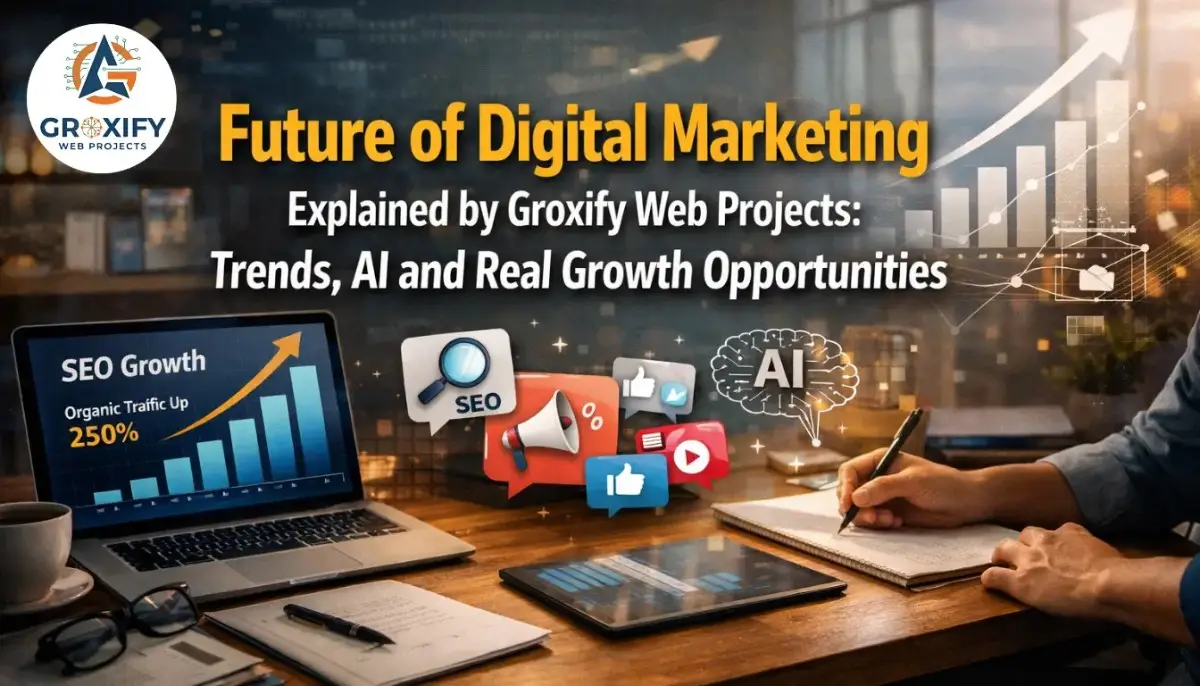
Future of Digital Marketing Explained by Groxify Web Projects: Trends, AI and Real Growth Opportunities
Why the Future of Digital Marketing in India Matters More Than Ever in 2026 Right now many founders, startups, and even small shop owners across places like Connaught Place, Karol Bagh, Lajpat Nagar, and Gurugram business hubs are asking the same question. “Is digital marketing still worth investing in?” In 2026 the answer is clearer than ever. The future of digital marketing is not just about running ads or posting on social media. It is now the main way businesses are discovered, trusted, and chosen. Today most customers search on Google first. Even local buyers sitting in Delhi NCR, Noida, Faridabad, or Rohini quickly compare 3–5 options before contacting any company. If a brand does not appear online with strong presence, it simply gets ignored. Over the past few years while working with clients through Groxify Web Projects, one pattern became very clear. Businesses that invested early in digital media marketing started seeing compounding results. After 6–12 months their leads became consistent. Their brand visibility improved. Their dependency on offline marketing reduced. At the same time many companies that delayed digital adoption faced common problems: Another major change in 2026 is AI-driven search and Google AI Overview results. Search engines now highlight trusted brands that consistently produce helpful, experience-based content. This means businesses must focus on real expertise, clear information, and strong online presence. For students, freelancers, and marketers the scope of digital marketing is also expanding rapidly. New roles around AI marketing, data analysis, automation, and content strategy are growing faster than traditional marketing jobs. So whether you are: Understanding where digital marketing is going next will help you make smarter decisions. What Exactly Is Digital Media Marketing and How It Is Changing Today Many people still think digital media marketing only means running Facebook ads or posting on Instagram. In reality it is much bigger. It is the full system of promoting a brand online where customers actually spend their time. In simple words, digital media marketing means using platforms like Google search, social media, websites, email, and paid advertising to attract, engage, and convert customers. Today the structure looks like this: Digital Marketing Channel What It Does Where Businesses Use It SEO (Search Engine Optimization) Helps websites appear on Google search results Local services, ecommerce, startups Social Media Marketing Builds audience and brand trust Instagram, LinkedIn, YouTube PPC Advertising Instant traffic and lead generation Google Ads, Meta Ads Content Marketing Educates and attracts long-term traffic Blogs, guides, videos Email Marketing Nurtures leads and repeat customers Ecommerce, SaaS, services Website Optimization Converts visitors into customers Landing pages, funnels What has changed recently is how people consume information. Five years ago users were willing to browse many pages. Today most people want fast answers. For example, many businesses in Delhi NCR areas like Rohini, Pitampura, and Noida Sector 62 now get customers through very specific searches like: Search behaviour has become intent-driven. While handling campaigns through Groxify Web Projects, we started noticing another pattern. Businesses that combine multiple channels perform far better than those depending on only one platform. A simple example many clients follow today: When these work together, results become predictable instead of random. Another major shift is automation and AI support. Tools now analyse audience behaviour, optimise campaigns, and even suggest content ideas. But strategy still matters. Technology helps execution, but human understanding of customer behaviour still drives real results. That is why understanding how the future of digital marketing is evolving is important for both businesses and individuals building careers in this field. Which Trends Are Shaping the Future of Digital Marketing in India If you look at how people search, shop, and compare today, it is clear that the future of digital marketing in India is moving faster than most businesses expected. Internet users in India are increasing rapidly, digital ad spending continues to grow, and most brands are shifting budgets toward online channels to stay competitive. From what we observe while working with businesses around Delhi NCR, Noida, Gurugram, and even smaller local markets, a few clear trends are shaping how marketing works in 2026. 1. AI-Driven Marketing Is Becoming Standard Artificial intelligence is now used to analyse customer behaviour, predict trends, and automate campaigns. Many companies rely on AI tools to improve targeting and content performance. In India alone, around 78% of businesses already use AI in marketing activities. In practical work at Groxify Web Projects, we now see AI helping with: But the important point is this: AI helps speed up execution, yet strategy and human understanding still drive results. 2. Short-Form Video and Creator Content Indian audiences today prefer quick visual content. Short videos on platforms like Instagram Reels, YouTube Shorts, and LinkedIn clips are dominating attention. Many government and brand campaigns now use short video storytelling because it increases reach and engagement. Businesses using video content often see: 3. Hyper-Personalised Marketing Earlier marketing was broad. Today marketing is personalised. AI tools track behaviour like: This allows brands to deliver personalised messages and offers to the right audience. For example, someone searching for SEO services in Delhi or Noida may start seeing content related to marketing agencies, marketing guides, and service providers almost immediately. 4. Voice and AI Search Behaviour Search behaviour is changing. People are no longer typing only short keywords. Now many searches look like questions: Voice assistants and AI search systems are increasing the importance of clear, helpful, experience-based content. 5. Social Commerce and Instant Buying Social media is no longer just for branding. It is becoming a direct sales platform. Today users can: This trend is especially strong among younger buyers and mobile-first users in India. 6. Mobile-First Marketing Most Indian users interact with brands through smartphones. In fact, about 78% of digital ad spending now happens on mobile platforms, showing how dominant mobile usage has become. This means websites, landing pages, and content must be designed for: Otherwise users leave within seconds. Key Takeaways The biggest shifts shaping the scope of digital marketing in