Digital Agency

Growth Focus
  • Helping Businesses Grow Worldwide — SEO Services That Drive Visibility,     High-Performance Website Development,     PPC Marketing for Better Reach,     Digital Marketing Built for Growth,     Social Media That Builds Your Brand,     Smart Solutions. Real Business Growth.

ppc marketing agency

pay per click company

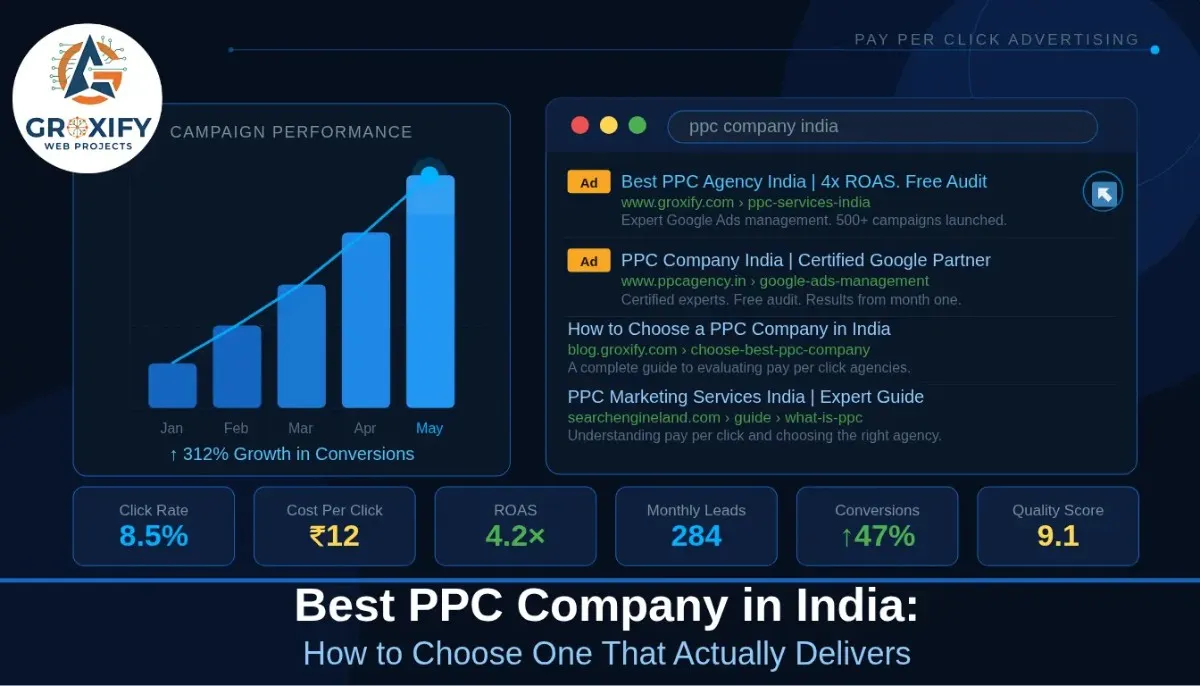
Best PPC Company in India: How to Choose One That Actually Delivers

Running ads without a clear strategy is one of the fastest ways to burn money. You spend, you get clicks, nothing converts, and you start thinking PPC does not work. It does. The problem is usually who is running it. Finding the right pay per click company in India is not as simple as Googling “best PPC agency” and picking the top result. This article walks you through what to actually look for, what to ask before you sign anything, how to judge results once the campaign is live, and what red flags most people miss until it is too late. What Does a Pay Per Click Company Actually Do? PPC stands for pay per click. It is a model of digital advertising where you only pay when someone clicks on your ad. Your ad appears on Google, YouTube, or other platforms, and every click costs you a set amount. The goal is to get the right people clicking, not just anyone. A pay per click company handles all of this on your behalf. They research which search terms your customers use, write the ad copy, manage the budget, launch the campaign, and keep refining it. Refining means they test different ads, adjust bids, and cut what is not working so your money does more. In practice, a good agency does not set it up and disappear. They check performance weekly, report to you in plain language, and keep improving. That last part is where most agencies fall short. Why So Many Businesses Waste Their PPC Budget Here is a scenario a lot of business owners recognize. You hired someone for pay per click advertising, paid for three months, received reports full of numbers you did not understand, and saw very little actual business growth. You blamed PPC. But PPC was not the problem. The most common reasons money gets wasted: That last point is the most painful one. Some agencies measure their own success by how much of your budget they spent, not by what you actually got in return. What Separates a Good PPC Marketing Agency from a Bad One Most articles on this topic tell you to “check reviews” and “look for experience.” That is a starting point, not a framework. Here is what actually separates good from bad. They Ask About Your Business Before Talking About Ads A good agency wants to understand your product, your customer, your margins, and your goals before they touch a single campaign setting. If someone shows up to the first meeting with a ready-made campaign plan before asking you anything, they are selling a package, not a solution. They Show You Real Numbers from Past Work Any agency can put together a nice case study. What you want is actual data. Ask them specifically: what was the cost per lead? Cost per lead means how much you spent in total to get one enquiry or sale. What was the ROAS (return on ad spend, meaning the revenue generated for every rupee spent on ads)? If they hedge or refuse to get specific, that tells you plenty. Their Reporting Makes Sense to a Normal Person You should not need to decode your own campaign report. A good agency explains what each number means and what they are doing about it. If reports are full of impressions (how many times the ad was shown) and clicks but nothing about actual conversions or leads, ask them to show you cost per lead and conversion rate instead. They Do Not Promise Specific Results No honest PPC professional will guarantee you a fixed number of leads or a specific ROAS before a campaign even starts. They can give you estimates based on experience in your industry. But guarantees in PPC are almost always a red flag. The market, competition levels, your offer, and your landing page all affect results in ways nobody can predict exactly upfront. Pay Per Click Services in India: What Does It Actually Cost? Pricing varies, but most agencies structure their fees in one of two ways. Pricing Model How It Works What to Watch Flat Monthly Retainer Fixed fee regardless of how much you spend on ads Agency may not be motivated to scale results Percentage of Ad Spend They charge 10 to 20 percent of your total ad budget Can push you to spend more, not necessarily get more A business spending 20,000 to 50,000 rupees per month on ads might pay anywhere from 5,000 to 15,000 rupees in management fees. Larger accounts cost more to manage. One thing that confuses a lot of new advertisers: the management fee and the ad spend are completely separate. Whatever you pay the agency is for their time and expertise. Your actual ad budget goes directly to Google or whichever platform you are advertising on. The two never mix. Questions to Ask a Pay Per Click Company Before You Hire Them Most people go into agency conversations hoping to be impressed. Flip that dynamic. You are interviewing them. Here is what to ask: Their answers reveal more than their pitch ever will. Good agencies give clear, honest answers, even when the answer is uncomfortable. Weak ones hedge, oversell, or get defensive. How to Judge Results Once the Campaign Is Running The first month is setup and learning. Google’s algorithm needs time to understand your audience, and no campaign runs at peak performance in week one. Do not judge month one the same way you judge month three. What to track from the beginning: By month two or three, clear trends should appear. Is cost per lead going down? Is conversion rate improving? Are the enquiries relevant? If all three are moving the right way, the agency is earning their fee. If costs are rising and lead quality is dropping with no clear explanation from your agency, ask directly. A good team will have an answer and a plan. If they don’t, that is your signal to start looking elsewhere. How to Choose

Best PPC Company in India: How to Choose One That Actually Delivers Read More »
importance of ppc

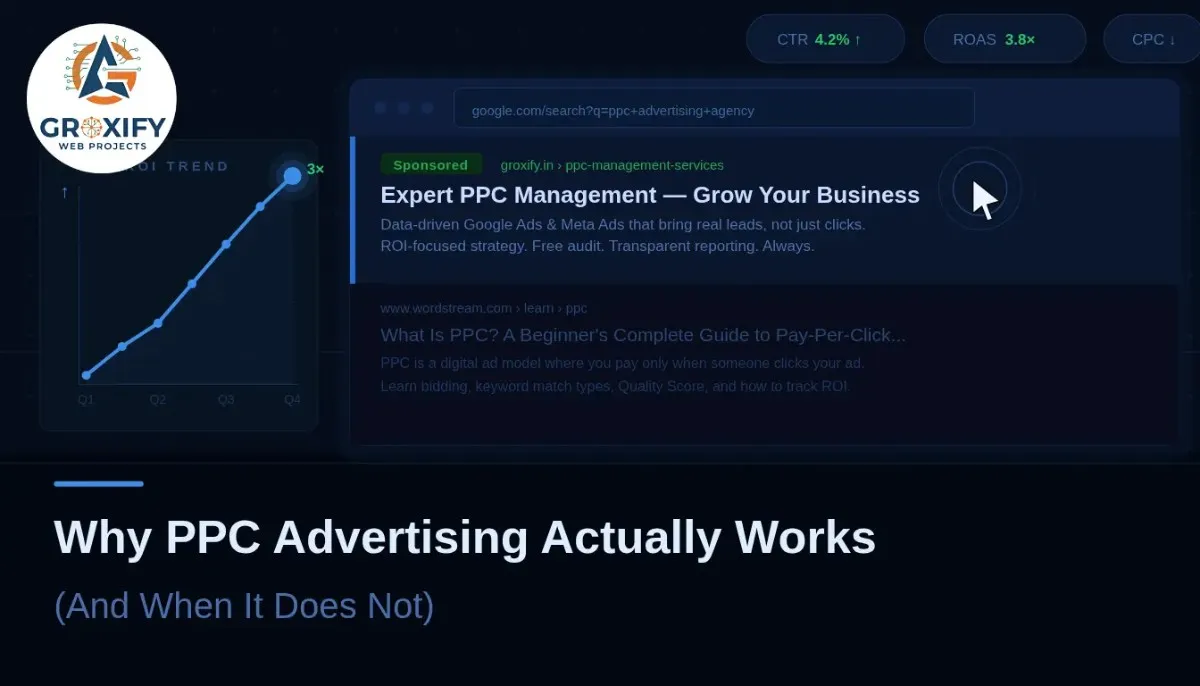
Why PPC Advertising Actually Works (And When It Does Not)

You open Google. Search for something. The first few results have a tiny “Sponsored” tag above them. You scroll past. Most people do. But a surprisingly large number of people click those results. And businesses keep spending real money to show up there, every single day. Understanding the importance of PPC is not just about knowing what the acronym means. It is about understanding why businesses that use it correctly grow faster, generate leads on demand, and do not sit around waiting for Google to rank them organically. This article covers all of that, including when PPC is not the right move. What Is PPC and How Does It Actually Work PPC stands for Pay-Per-Click. It is a type of online advertising where you pay only when someone clicks your ad. Not for how many people saw it. Only for actual clicks. Here is how it works in practice. You create an ad. You set a budget. You choose who sees it, based on keywords, location, age, interests, or behavior. Someone searches for something relevant, your ad appears, they click it, and you pay a small fee for that click. Google Ads is the most popular PPC platform. It shows ads directly in Google search results. Meta Ads, which run on Facebook and Instagram, work differently. They target people based on who they are, not just what they searched for. Both are PPC, but the strategy behind each is quite different. The cost per click varies by industry. Competitive spaces like insurance or legal services cost more per click simply because more businesses are bidding on the same audience. The Real Importance of PPC for Business Growth The biggest reason businesses use PPC is speed. SEO (Search Engine Optimization, the process of getting your website to rank organically on Google) takes months. PPC can get you in front of the right people the same day you launch. That is not a minor thing. If you just started a business and are waiting six months for organic traffic, that is six months of no customers. PPC gives you a way to test, sell, and grow while your organic presence is still building. But speed is only part of the picture. PPC also gives you a level of control that almost no other channel offers. You decide exactly who sees your ad. If your ideal customer is a 35-year-old business owner in Noida who is interested in accounting software, you can target that exact person. With a newspaper ad or even a social media post, you cannot. You also get measurable data. How many people clicked. How many converted. What it cost to acquire each customer. This is what separates PPC from most traditional marketing. You are not guessing what worked. The numbers tell you directly. And here is something people often miss. PPC helps even when users do not click. Someone sees your brand name in a sponsored result three times in a week. By the fourth encounter, they already recognize you before they ever land on your site. That familiarity effect is real and it compounds over time. Benefits of PPC Marketing That Organic Search Cannot Match Organic search is genuinely valuable. Nobody is disputing that. But there are specific situations where the benefits of PPC marketing are simply faster, more targeted, or more reliable than waiting on rankings. Launching something new. When you have a new product or service, you have zero organic rankings. PPC puts your offer in front of people from day one. You cannot wait for SEO when you have inventory to move or a deadline to hit. Targeting by intent. Google Ads targets people at the exact moment they are searching for what you offer. This is high-intent traffic, meaning the person is already looking for a solution. They typed it. They are ready. Catching them at that moment is powerful. Retargeting. This is the ability to show ads specifically to people who already visited your website but left without taking action. You have experienced this: you look at a product online and then see ads for it everywhere for the next few days. That is retargeting. It converts at a much higher rate than showing ads to cold audiences. Seasonal and time-sensitive campaigns. Sale season, a product launch, a festival offer. PPC lets you turn traffic on and off like a switch. Organic search cannot do that. Testing before committing. You can run a small PPC campaign to check if a product idea, service offer, or message actually resonates with your audience before investing in full production or a long-term SEO strategy. That intelligence alone can save a business significant money. Google Ads vs Meta Ads: Which One Should You Run This is one of the most common questions, and the honest answer is: it depends on what you are selling and who you are selling it to. Google Ads Meta Ads Best for People actively searching for your product or service Building awareness, retargeting, lifestyle products How targeting works Based on keywords (what they search) Based on demographics and interests (who they are) Intent level High (they are already looking) Lower (they are browsing, not searching) Works well for Services, local businesses, B2B products E-commerce, fashion, food, entertainment Cost per click Generally higher Often lower, but more clicks needed to convert In practice, most businesses serious about growth run both. Google Ads captures people already looking for what you offer. Meta Ads builds awareness and pulls people in before they even know they need you. Start with whichever matches your customer’s behavior best. If people search for what you sell (like “plumber in Gurgaon” or “HR software for startups”), start with Google Ads. If your product needs to be seen before someone wants it (fashion, food, lifestyle), Meta Ads often performs better. When PPC Does Not Work (Most Articles Skip This) Every blog on PPC talks about how powerful it is. Very few talk about when it fails. This is actually the

Why PPC Advertising Actually Works (And When It Does Not) Read More »

Scroll to Top