What Is PPC? Meaning, Examples and Benefits of Pay Per Click Advertising
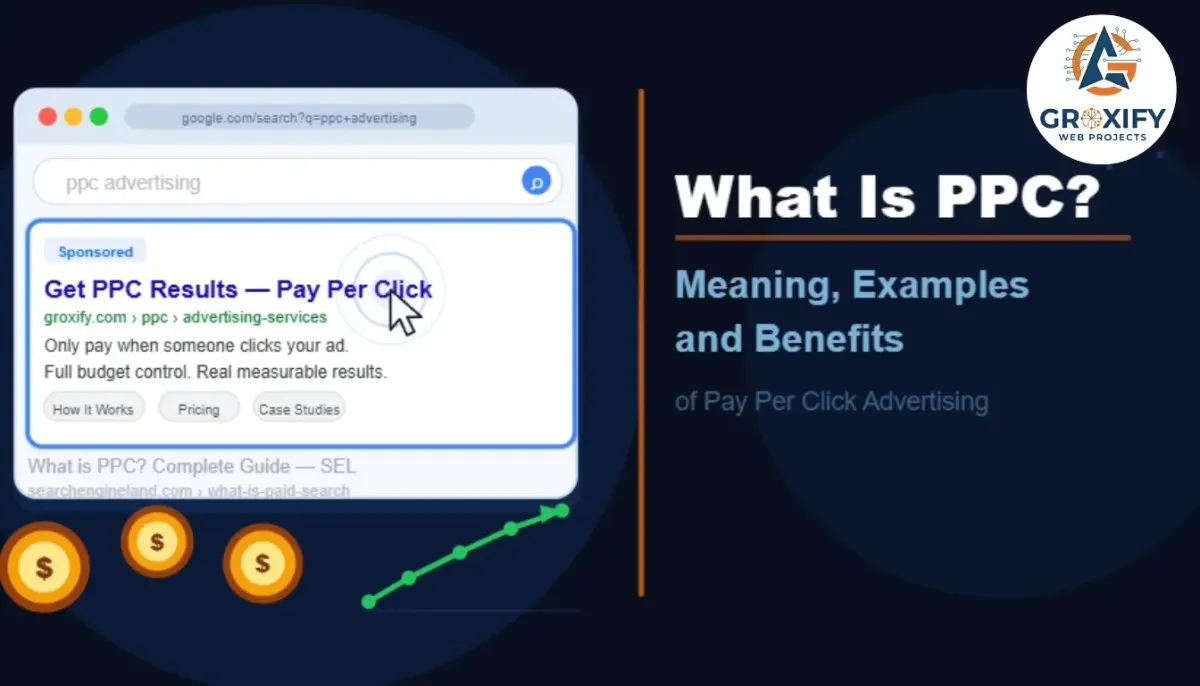
What Is PPC? PPC stands for Pay Per Click. It is a type of online advertising where you only pay when someone actually clicks your ad — not when it shows up, not when someone sees it, only when they click. So your ad can appear a thousand times. If nobody clicks, you pay zero. The moment someone clicks and lands on your page, that is when the cost happens. That one idea is the whole foundation of pay per click advertising. You see PPC every single day. Those “Sponsored” results sitting above Google’s organic listings — that is PPC. The product ads that appear when you search for something to buy — also PPC. The ad that plays before a YouTube video — PPC again. It runs across Google, Facebook, Instagram, YouTube, LinkedIn, and almost every major platform online. How Does PPC Work? This is where most beginners get lost, but it is actually simple once you see it clearly. When someone searches on Google, an auction happens in milliseconds behind the scenes. Advertisers who have bid on that keyword compete for the available ad slots. The winner’s ad shows up. If the person clicks — the advertiser pays. But here is the part most people do not know. Google does not just pick whoever bids the highest. It looks at two things together — your bid amount and your Quality Score. Quality Score is Google’s rating of how relevant your ad and landing page are to the keyword you are targeting, scored from 1 to 10. A well-written ad with a relevant landing page and a lower bid can beat a poorly made ad with a much higher bid. This means money alone does not win PPC. Relevance does. That is why two businesses spending the same budget can get completely different results. The whole auction — search, competition, decision, ad display — happens before the page even loads. What Is a Bid in PPC? A bid is simply the maximum amount you are willing to pay for one click. You set this yourself. If your bid is 50 rupees, you are saying you will pay up to 50 rupees every time someone clicks your ad. You almost never pay your full bid though. Google’s system usually charges you just slightly more than the next competitor’s bid — so actual cost per click is often lower than what you set. What Is Quality Score? Quality Score is Google’s way of measuring how useful your ad actually is to the person searching. It considers three things — how relevant your ad text is to the keyword, how good your landing page experience is, and your expected click-through rate based on past performance. Higher Quality Score means lower costs and better placement. It rewards advertisers who genuinely help users, not just those with the biggest budgets. Types of PPC Ads PPC is not just Google search ads. It runs across multiple formats and platforms, each working slightly differently. Search Ads These are the text ads that appear on Google or Bing when someone searches a keyword. They show above and below the organic results with a small “Sponsored” label. This is the most common form of PPC and works best when someone is actively searching for something specific. Shopping Ads These are the product image cards with prices that appear at the top of Google when you search for something to buy. Each click goes directly to that product page. E-commerce businesses use these heavily because they show the product and price before the click — so the person clicking already has some buying intent. Display Ads These are image or banner ads that appear on websites, apps, and Gmail across Google’s network. They work on PPC or CPM (cost per thousand impressions — meaning you pay per view, not per click). Display ads are better for brand awareness than direct conversions. Video Ads The ads you see on YouTube before or during videos. You pay when someone watches past a certain point or clicks. Good for reaching people who are not yet searching but might be interested. Social Media PPC Facebook, Instagram, and LinkedIn all use PPC models. You target based on interests, demographics, and behavior rather than search keywords. These work well when you want to reach a specific type of person rather than someone searching a specific phrase. PPC vs SEO — Honest Comparison Almost every beginner asks this. And most articles dodge the real answer. So here it is straight. PPC SEO Speed Traffic within hours Takes months Cost Pay per click No cost per click Traffic stops when Budget runs out Rankings drop Control Very high Medium Best for Quick results, testing, launches Long-term sustainable growth Trust factor Lower — marked as Sponsored Higher — feels organic PPC is not better than SEO. SEO is not better than PPC. They solve different problems at different stages. If you need traffic this week for a product launch or a sale — PPC. If you are building something for the long term and want traffic that does not disappear the moment you stop paying — SEO. Most serious businesses eventually run both together. The thing is, PPC also gives you keyword data. You find out which searches actually convert into customers. Then you use that data to build your SEO strategy smarter. That combination is where real growth happens. Real Benefits of PPC Honest benefits — not marketing talk. You pay for actual interest. Someone saw your ad and chose to click. That is a signal of real curiosity. You are not paying to be ignored like a billboard on a highway. Immediate traffic. A well-set campaign can bring visitors within hours of going live. No waiting months for rankings to build. Precise targeting. You can choose who sees your ad based on what they searched, where they are, what device they use, what time of day it is, and even what they have looked at
What Is PPC? Meaning, Examples and Benefits of Pay Per Click Advertising Read More »