Table of Contents
What Is Digital Marketing and Why Everyone Is Talking About It in 2026
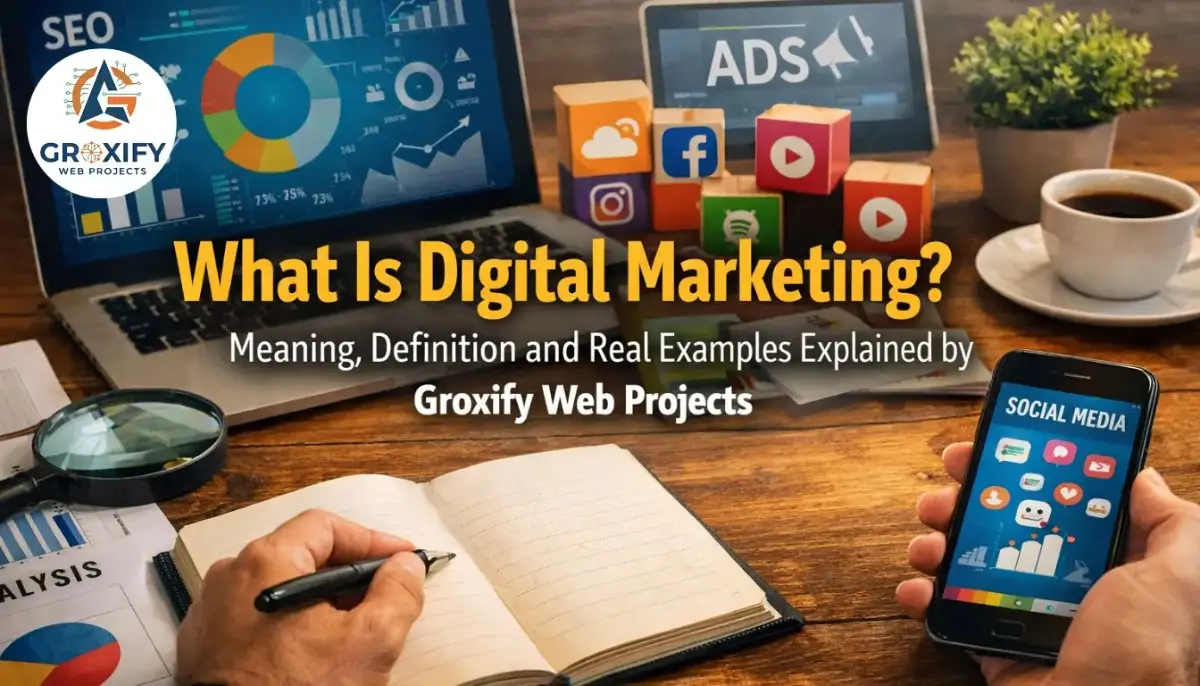
Digital marketing simply means promoting your business using the internet and digital platforms. This includes Google search, social media, websites, email, and even WhatsApp. In 2026, people first check their phone before trusting any brand. That habit has only grown stronger.
In my daily work, I see this clearly. A shop, startup, or service that is not visible online is often ignored, even if their work is good. Customers now compare, read reviews, check Instagram, and search on Google before calling.
Digital marketing matters today because it meets people where they already are. Online. It helps businesses reach the right audience, at the right time, with the right message. That is why founders, students, freelancers, and even local businesses are all talking about it now. It is no longer optional. It is basic survival and smart growth.
Digital Marketing Meaning in Simple Words With Daily Life Examples
Digital marketing meaning is very simple. It is the way businesses talk to customers online. Just like earlier people used newspapers, banners, or word of mouth, today the conversation happens on mobile screens.
Think about your own day. You search on Google before buying anything. You watch reels on Instagram. You get offers on WhatsApp. All this is digital marketing in action.
In real work, I have noticed one clear pattern. People trust what they repeatedly see online. A local service that appears on Google Maps, has a clean website, and shares useful posts feels more reliable. That is why at Groxify Web Projects, we focus on showing businesses clearly and honestly where people already spend their time.
Digital marketing is not tricks or shortcuts. It is simple visibility, communication, and trust built online, step by step.
Digital Marketing Definition Explained Without Jargon
Digital marketing definition, in plain words, is the use of digital channels to attract, inform, and convert people into customers. No complex terms. No theory.
It means helping the right people find your business online, understand what you offer, and feel confident enough to take the next step. That step could be a call, a message, a visit, or a purchase.
While working with different clients, one thing becomes very clear. Digital marketing works best when it answers real questions. Not when it pushes ads blindly. A good website, useful content, and proper visibility on Google do more than loud promotions.
At Groxify Web Projects, we treat digital marketing as a long-term relationship, not a one-time campaign. It is about being present, consistent, and helpful wherever your customer looks for you online.
How Digital Marketing Actually Works Step by Step
Digital marketing works in a simple flow. No magic. Just clear steps done properly.
First, people discover you. This happens through Google search, social media posts, ads, or referrals. If they cannot find you online, the journey stops here.
Second, they check you. They visit your website, read reviews, or scan your Instagram or LinkedIn. I have seen many businesses lose customers at this stage due to confusing pages or outdated information.
Third, they interact. They call, message, fill a form, or follow you. This is where trust matters most. At Groxify Web Projects, we guide clients to keep this process smooth and honest.
Finally, conversion and follow-up. The user becomes a customer, and ongoing communication builds loyalty. Digital marketing works when every step feels natural, not forced.
What Are the Main Types of Digital Marketing Used Today
Digital marketing is not one single thing. It is a mix of methods, each used for a different purpose. In real projects, I rarely see one method working alone. Results usually come when the right mix is chosen.
Here are the main types used today:
- Search Engine Optimization (SEO)
Helps your website appear on Google when people search for your service. - Social Media Marketing
Builds awareness and trust on platforms like Instagram, Facebook, LinkedIn, and YouTube. - Paid Advertising (PPC)
Quick visibility through Google Ads or social media ads when timing matters. - Content Marketing
Blogs, videos, and guides that answer real questions and build long-term trust. - Email and WhatsApp Marketing
Used for follow-ups, offers, and customer retention.
At Groxify Web Projects, we help businesses choose what fits their stage and budget, not everything at once.
Digital Marketing Basics Every Beginner and Business Owner Must Know
Before tools and platforms, there are a few basics that decide whether digital marketing works or fails. Many beginners skip these and struggle later.
Here are the core basics that matter most:
- Clear goal first
Decide if you want calls, leads, sales, or brand visibility. Everything depends on this. - Right audience understanding
Marketing fails when you talk to everyone. It works when you talk to the right people. - Strong online foundation
A simple website, clear message, and correct contact details are non-negotiable. - Consistency over speed
I have seen steady efforts beat aggressive short campaigns many times. - Tracking what works
Knowing where leads come from saves money and confusion.
At Groxify Web Projects, we always fix basics first. Without them, advanced marketing gives weak results.
Common Digital Marketing Mistakes I See Indian Businesses Making
This is one section I feel strongly about, because these mistakes cost time and money. I come across them regularly while reviewing accounts and websites.
Here are the most common ones:
- Expecting instant results
Digital marketing takes time. SEO and content need patience. - Running ads without a proper website
Traffic comes, but users leave due to confusion or slow pages. - Copying competitors blindly
What works for one business may fail for another. - Ignoring local search behaviour
Many forget Google Maps and local intent searches. - Doing everything at once
Too many platforms, no focus, no clarity.
At Groxify Web Projects, we usually start by fixing these basics before scaling anything further.
Real Digital Marketing Examples From Indian Businesses
Let me share real, simple cases I have handled around Ghaziabad, Noida, and Delhi that show how digital marketing works when done right.
Case Study 1: Local Clinic in Indirapuram
Situation
A small clinic struggled to get new patients online. People searched for treatment, but the clinic did not appear anywhere on Google.
Problem
No website and no Google presence. Most calls went to competitors.
Action Taken
We built a simple website and optimised it for local search terms like “best clinic near Vaishali Metro”. We also set up Google Business Profile.
Result
Within 8 weeks, calls increased by over 3x. Patients now found the clinic just by searching on Google Maps.
Patient feedback:
“Before, no one knew we were here. Now patients call every day. It feels like we opened a new branch online.”
Case Study 2: Startup in Sahibabad
Situation
A tech startup wanted leads for its service but had inconsistent social posts and unclear messaging.
Problem
Traffic came but nobody filled the form or enquired.
Action Taken
We rewrote the website copy, focused on problem-solution messaging, and shared short educational videos on LinkedIn.
Result
Leads improved by around 4x in 10 weeks. Founders said the quality improved too.
Client feedback:
“We finally feel our audience understands what we do. Leads are better and warmer.”
These examples are not rare. They follow simple logic: visibility + clarity = results. That is the heart of effective digital marketing in 2026.
How Much Does Digital Marketing Cost in India and What Results to Expect
This is one question I answer almost every week when talking to founders in Delhi, Noida, Ghaziabad, and nearby areas.
First, a simple truth: there is no fixed price that fits every business. Costs vary based on goals, industry, and competition.
Here is a basic cost guideline most Indian businesses see in 2026:
| Service | Typical Monthly Cost (INR) | Expected Outcome |
| Basic SEO | ₹15,000 – ₹40,000 | Better Google ranking, more organic calls |
| Social Media Management | ₹10,000 – ₹30,000 | Regular engagement and brand visibility |
| PPC / Ads | ₹10,000 – ₹1,00,000+ (ad spend separate) | Immediate traffic and leads |
| Website Development | ₹20,000 – ₹1,20,000 | Professional online presence |
| Content & Blogs | ₹8,000 – ₹25,000 | Answers customer questions and boosts SEO |
These are regular working ranges I see in small to medium local businesses.
What results to expect and when
In my work, I tell clients this early: results do not happen overnight.
- SEO: Usually you start seeing noticeable improvements in 8–12 weeks.
- PPC Ads: Quick clicks and leads can start within days if set up right.
- Social Media: Real engagement builds over 6–8 weeks.
Why costs vary
- Competition level: More competitors need more effort and higher budgets.
- Business category: Some services (like health or finance) need clearer messaging and more trust-building.
- Audience behaviour: In cities like Delhi or Noida, users expect clear messaging and fast responses.
If a digital strategy is cheap and promises instant #1 ranking, be cautious. I have seen many businesses waste money on such offers.
In real practice with Groxify Web Projects, we start with basics, measure early signals, and then scale what actually works. That gives clarity on what returns to expect, instead of guessing.
Who Should Use Digital Marketing and When It Makes Sense
Digital marketing is useful for almost anyone, but it works best when timing and intent are clear.
From what I see on ground around Delhi, Noida, and Ghaziabad, these groups benefit the most:
- Founders and startups who need visibility fast and cannot rely only on word of mouth
- Local businesses like clinics, service providers, and shops that depend on nearby searches
- Growing companies that want steady leads, not random enquiries
- Students and learners who want real skills that are used in live projects
- Freelancers and consultants building personal brand and trust online
When does it make sense?
When you are ready to be consistent. Digital marketing fails when people expect instant magic. It works when you are prepared to show up clearly online, answer real questions, and improve step by step.
At Groxify Web Projects, we usually guide businesses to start once basics are ready, not before.
How We Handle Digital Marketing at Groxify Web Projects (Founder’s Note)
I am Rohit Singh, Founder of Groxify Web Projects. I started this company after spending years working closely with businesses that were confused, overcharged, or misled about digital marketing. Many had tried agencies. Most had no clarity on what was actually working.
At Groxify Web Projects, we work like a real team. SEO, content, ads, and web work happen together, not in isolation. We first understand the business, local area, and customer behaviour. Then we build only what is needed. Nothing extra.
I have personally worked with startups, local service businesses, and growing brands across Delhi NCR. Some needed leads. Some needed clarity. In many cases, fixing basics gave better results than aggressive campaigns.
Our approach is simple. Do honest work. Track what changes. Improve slowly but correctly. Clients often tell us they finally understand their marketing, not just pay for it.
What Will Change in Digital Marketing in the Next 1–2 Years
Digital marketing is already changing, and the next one to two years will make it more practical and less noisy. I am seeing this shift clearly in live campaigns.
First, search behaviour is becoming more local and conversational. People now type full questions or use voice search. “Near me” and area-based searches will matter more than generic keywords.
Second, quality will beat volume. Posting daily without purpose will fade. Helpful content that actually answers questions will perform better on Google and social platforms.
Third, trust signals will matter more. Reviews, real photos, clear pricing, and fast-loading websites will influence decisions. Core Web Vitals and mobile experience will quietly decide visibility.
Fourth, short-form video will stay strong, but only when it explains something useful. Pure entertainment without value will struggle.
At Groxify Web Projects, we are already guiding clients to focus on clarity, local relevance, and user experience. That direction is not a trend. It is where digital marketing is settling.
Key Takeaways Before You Decide Your Next Step
Before moving ahead with digital marketing, it helps to pause and summarise what really matters. These points come from real work, not theory.
- Digital marketing is about being visible where people already search and spend time
- Results come from consistency, not shortcuts or instant promises
- Basics like website clarity and local presence matter more than tools
- One or two well-chosen channels work better than trying everything
- Costs depend on goals, competition, and patience level
- Local relevance and trust signals drive decisions in 2026
If you are still learning, take time to understand before spending.
If you are comparing options, look for clarity, not hype.
If you are ready to act, start small and track everything.
At Groxify Web Projects, this is how we guide people to move forward without confusion.
Frequently Asked Questions About Digital Marketing
Digital marketing means promoting your business online using platforms like Google, social media, websites, email, and apps. It helps people find you, understand your service, and contact you easily. In simple terms, it is online visibility plus trust.
Yes. In many real cases, local businesses benefit the most. People search “near me” daily. A good Google presence, reviews, and clear information help small shops, clinics, and services get steady enquiries without large budgets.
It depends on the method. Ads can show results in days. SEO and content usually take 2–3 months for visible improvement. I have seen patience bring better quality leads than rushing with shortcuts.
Start small. Many beginners begin with ₹15,000–₹30,000 per month focusing on one channel. The key is testing, learning, and then scaling what works instead of spending everywhere at once.
You can start learning basics on your own. Many people do. But as business grows, managing SEO, ads, content, and tracking together becomes difficult. That is when guided help saves time and mistakes.
Both serve different purposes. SEO builds long-term visibility. Ads give quick results. In real projects, I have seen the best outcomes when both are used carefully based on budget and urgency.
Yes, if done ethically. Avoid fake reviews, spam links, or misleading ads. These may give short wins but harm trust later. Clean, user-focused work lasts longer and keeps businesses stable.
Not always. Followers help visibility, but conversion depends on message clarity and trust. I have seen small pages with clear communication convert better than big pages with no direction.
Understanding users, writing clearly, basic data reading, and consistency matter more than tools. Platforms change, but human behaviour stays similar. This skill gap decides success more than certifications.
Check real outcomes. Calls, messages, leads, and sales. Not just likes or impressions. In practical work, clear tracking always removes confusion and helps decide the next step calmly.
Final Thoughts on Choosing the Right Digital Marketing Path
Digital marketing is not about doing everything. It is about doing the right things at the right time.
If you are new, focus on understanding and basics. If you are already spending, pause and review what is actually working. Many people rush because others are doing it. That usually creates confusion, not growth.
From real work on ground, one thing stays constant. Businesses that stay patient, honest, and consistent see better results over time. Shortcuts fade. Clear effort compounds.
Take time to evaluate your goals, budget, and readiness. Ask the right questions. Move step by step. And if you ever feel stuck, it is okay to seek guidance or simply learn more before deciding.
The right digital marketing path always feels calm, clear, and manageable.