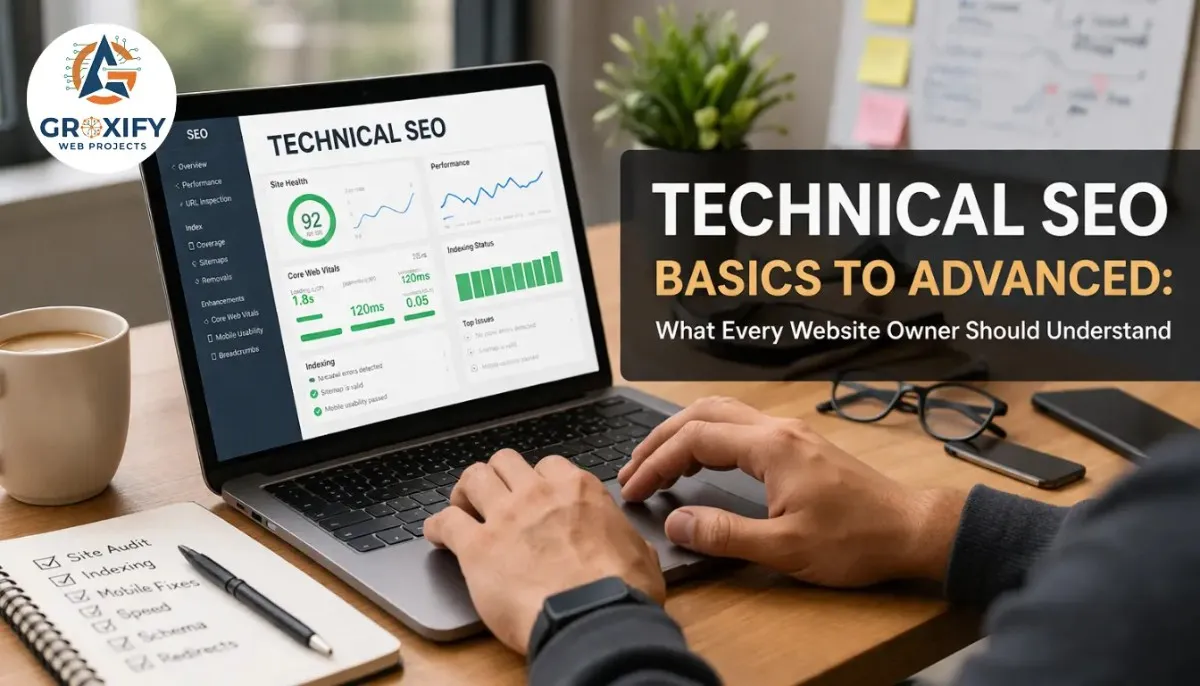
Technical SEO Basics to Advanced: What Every Website Owner Should Understand
Why Technical SEO Still Decides Rankings (And Why Many Sites Fail Without It) Many founders and business owners come to me with the same problem. Their website looks good. Content is written. Keywords are added. Still rankings do not move. Traffic stays flat. Leads do not come. In most of these situations the real issue is not content. It is technical SEO. In Google is more strict about website quality. If a site is slow, broken, not mobile friendly, or difficult for Google to read, rankings drop even if content is good. I have worked with businesses around Delhi areas like Laxmi Nagar, Karol Bagh and Noida Sector 62 where just fixing technical problems improved impressions within 6–10 weeks. Common reasons websites fail: • Pages not indexed• Wrong canonical setup• Poor site speed• Broken internal links• No schema structure• Mobile usability problems At Groxify Web Projects, we usually explain this simply to clients: Content helps you compete. Technical SEO allows you to enter the competition. Key Takeaways • Technical SEO is the base of ranking, not an extra task• Google first checks usability then relevance• Small technical fixes often give faster gains than rewriting content• Most ranking drops today are technical quality issues, not keyword problems If someone is still only focusing on keywords and ignoring technical health, they are fighting with one hand tied. What Is Technical SEO in Simple Words? (Real Explanation for Beginners) If I explain technical seo the way I explain to first-time clients, I say this: Technical SEO means making your website easy for Google to access, understand, and trust. Think like this. Your website is a shop in a busy market like Connaught Place or Nehru Place. Content is your products. But technical SEO is your shop entrance, lighting, navigation and billing system. If entry itself is blocked, customers will not come inside. In simple terms technical SEO covers: • Website speed• Mobile friendliness• Proper page structure• Secure HTTPS setup• Clean URLs• Sitemap and robots setup• Fixing errors Google shows in Search Console At Groxify Web Projects, when we audit new websites, around 60–70% problems are basic technical gaps, not strategy issues. Many startups and SEO learners think SEO means backlinks only. Reality is different. Beginner vs Practical Understanding Beginner Thinking Real Technical SEO Reality SEO means keywords SEO starts with website health Content alone ranks Technical trust comes first Backlinks fix ranking Structure fixes crawling Design is enough Performance matters more Key Takeaways • Technical SEO is website health management• Without it Google may ignore your pages• Beginners should start with basics not advanced tricks• Strong foundation makes future SEO easier Once this base is clear, understanding checklists and advanced fixes becomes much easier. Technical SEO Checklist We Actually Use on Real Client Projects When new clients approach us at Groxify Web Projects, they usually expect some complex audit. Reality is more practical. Most results come from fixing fundamentals consistently. This is a simplified version of the technical seo checklist we normally follow whether the business is a startup in Gurugram or a local service provider in East Delhi. Core Technical SEO Checklist Area What we check Why it matters Indexing Pages indexed in Google No index means no ranking Speed Page load under 3 seconds Users leave slow sites Mobile Mobile usability errors Google uses mobile first Structure URL and internal linking Helps crawling Security HTTPS setup Trust signal Sitemap XML sitemap present Helps discovery Errors 404 and redirect issues Stops ranking loss Schema Structured data added Improves visibility Canonical Duplicate control Prevents confusion Practical Process We Follow Normally our workflow looks like this: • Run Search Console error review• Check crawl issues using audit tools• Fix indexing blocks• Improve speed bottlenecks• Clean duplicate pages• Add structured schema where useful• Recheck after 30 days One ecommerce founder from Noida told me after these fixes:“Traffic did not jump overnight, but within two months impressions started growing steadily and bounce rate reduced.” That is usually how technical SEO works. Quiet improvements first. Rankings follow later. Key Takeaways • A checklist prevents missing basics• Most gains come from fixing errors not chasing hacks• Rechecking after fixes is important• Technical SEO is maintenance work, not one-time work This checklist alone solves many hidden ranking blockers before advanced work even begins. Website Foundations That Matter Most (Speed, Mobile, Core Web Vitals) If technical SEO is the base, then speed and mobile experience are the pillars. In the last two years especially, I have seen Google become very sensitive about user experience signals. Most Indian users browse on mobile. Many searches happen while travelling in metro, sitting in a shop, or comparing options quickly. If your site loads slowly, they simply close it. In audits we do at Groxify Web Projects, these three factors usually create the biggest difference: Foundations That Impact Rankings Factor What it means What we usually target Page Speed How fast page opens Under 2–3 seconds Mobile Experience Layout on phone No text overlap Core Web Vitals User experience signals Good performance scores Common Problems We Regularly Fix • Heavy images from designers• Too many WordPress plugins• Cheap hosting delays• No caching setup• Layout shifts on mobile• Buttons too close together A coaching institute website near Preet Vihar improved enquiry calls after we reduced load time from 5.8 seconds to 2.1 seconds. No new content. Only performance fixes. Key Takeaways • Speed directly affects user trust• Mobile experience is no longer optional• Core Web Vitals reflect real user comfort• Faster sites usually see better engagement signals If these three are strong, many other SEO efforts start working better automatically. Crawling and Indexing: How Google Really Reads Your Website Many people think publishing a page means Google will automatically rank it. That does not always happen. First Google must find the page (crawl) and then store it (index). Only after that ranking starts. I explain this to business owners like this. Crawling is Google visiting your shop. Indexing is Google adding your shop to
Technical SEO Basics to Advanced: What Every Website Owner Should Understand Read More »