Digital Agency

Growth Focus
  • Helping Businesses Grow Worldwide — SEO Services That Drive Visibility,     High-Performance Website Development,     PPC Marketing for Better Reach,     Digital Marketing Built for Growth,     Social Media That Builds Your Brand,     Smart Solutions. Real Business Growth.

search engine optimization

search engine marketing

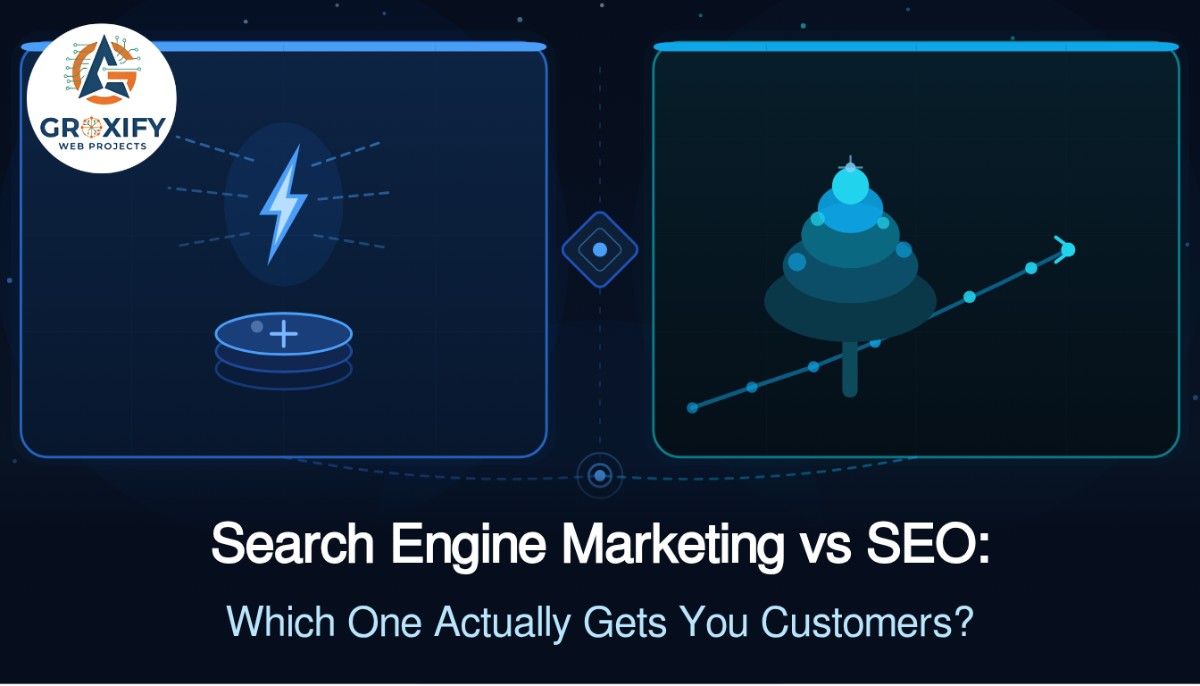
Search Engine Marketing vs SEO: Which One Actually Gets You Customers?

Two terms, same search results page, completely different strategies. That is where most people get confused. You search something on Google and you see results marked “Sponsored” at the top, then a bunch of regular results below. Both came from different approaches. One costs money every time someone clicks. The other took months to earn its spot. Search engine marketing is the paid side. SEO is the organic side. But knowing just that is not enough to make a real decision for your business or project. In this article, you will understand how both actually work, where each one wins, where it fails, and how to decide what makes sense for you right now. What Search Engine Marketing Actually Means Most people hear “search engine marketing” and assume it covers everything related to Google. It does not. SEM, short for search engine marketing, specifically refers to paid advertising on search engines. When a business pays Google to show their ad at the top of search results for specific keywords, that is SEM. The most common form is Google Ads, where you bid on keywords and pay each time someone clicks your ad. This model is called PPC, or pay-per-click, meaning your wallet gets charged per click, not per impression. The “Sponsored” label is the giveaway Every time you see “Sponsored” next to a Google result, that business is running SEM. They picked a keyword, set a budget, and their ad appeared. The moment they stop paying, the ad disappears. That is the core dynamic of paid search. SEM gives you visibility fast. No waiting, no earning it. But it runs entirely on budget, and the moment that budget stops, so does your traffic. What SEO Does (And Why It Takes Time) SEO, or search engine optimization, is the process of improving your website so Google naturally shows it higher in search results, without you paying for each click. The word “organic” is used here because this traffic grows naturally over time rather than being bought. You improve things like your content quality, page structure, site loading speed, and how many other credible websites link back to yours. Google evaluates all of this and decides where to rank you against every competing page on the same topic. Why organic rankings take months Google needs time to discover your content, crawl it (meaning Google’s bots visit and read your pages), compare it against millions of other pages, and then decide where it belongs. That whole process takes weeks, sometimes months. But once you rank? Clicks come in without paying for each one. Over time, a well-ranked page becomes one of the most cost-efficient traffic sources a business can have. That is the real appeal of SEO. SEM vs SEO: The Differences That Actually Matter Here is a clean side-by-side so nothing stays vague: Factor SEM (Paid Search) SEO (Organic Search) Speed Immediate visibility Takes 3 to 6+ months Cost model Pay per click, ongoing Time and effort upfront Traffic lifespan Stops when budget stops Continues without payment Placement Above organic results, marked Sponsored Below ads, based on ranking Control You set exact keywords and timing Google decides rank based on quality signals Trust perception Some users skip ads instinctively Most users treat organic as more credible Best suited for Launches, short campaigns, testing Long-term authority and brand building One thing worth understanding here: organic results still get the majority of clicks, even with ads sitting above them. For informational searches (someone researching, not buying yet), users tend to scroll past ads. For commercial searches (someone ready to buy), ads perform much better. When Search Engine Marketing Makes More Sense If you need traffic now, not three months from now, SEM is the right call. A product launch, a limited-time offer, a new service going live, or a business with no online presence but an active budget. These are SEM scenarios. It also works well as a testing tool. Before spending months optimizing a page for a keyword, you can run a quick Google Ads campaign to check if people actually search for it, click on it, and buy. That data is genuinely valuable, and you would have waited a long time to get it through SEO alone. And for competitive industries where the top organic spots are locked by massive, established brands, paid search can be the only realistic way to show up on page one in any reasonable timeframe. Honestly, SEM rewards people who understand their numbers. If you know that every 100 clicks brings 5 customers and each customer is worth a certain amount, you can run ads profitably and keep scaling. The math has to work, though. Running ads without tracking conversions (the moment a visitor completes a goal, like a purchase or a form fill) is just burning money. When SEO Is the Smarter Investment If your budget is tight and you are thinking long-term, SEO builds something that compounds. A well-ranking article or product page can bring traffic for years without additional spending. SEM simply cannot match that. SEO also builds trust in a way ads do not. Users know the “Sponsored” label means someone paid to be there. Organic results feel more credible for research-heavy searches like “best accounting software for freelancers” or “how to register a company in India.” Businesses building a brand, an audience, or an information-heavy product tend to benefit enormously from organic search over time. Groxify Web Projects consistently sees this pattern in practice: businesses that invest in SEO early end up with lower customer acquisition costs as they scale. One thing to be honest about: SEO is not free. You are trading money for time and skill. Writing quality content, earning backlinks (links from other websites pointing to yours, which signal credibility to Google), and fixing technical site issues all take real effort or money paid to someone doing it well. The cost is just less visible than an ad bill. Can Both Work Together? Yes, and this is actually

Search Engine Marketing vs SEO: Which One Actually Gets You Customers? Read More »
search engine optimization

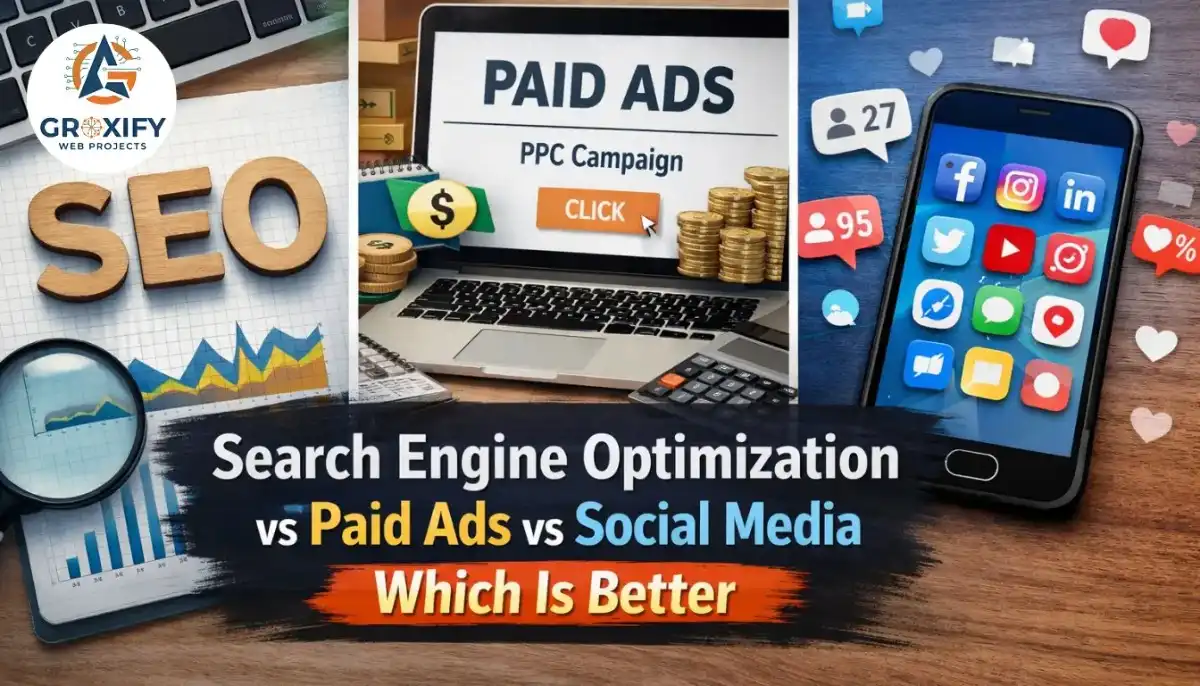
Search Engine Optimization vs Paid Ads vs Social Media Which Is Better

Why Are So Many Websites Not Ranking on Google? If you have ever built a website and waited for traffic, you already know this feeling. Weeks pass, sometimes months, but nothing really moves. This is something I see very often with founders in Delhi areas like Laxmi Nagar, Karol Bagh, and even startups in Noida Sector 62. The truth is simple. In search engine optimization is no longer just about putting keywords on a page. Google has become much smarter. It now checks how real users behave, how fast your site loads on mobile, and whether your content actually solves a problem. Here are the most common reasons why websites do not rank: I have worked with a local service business in South Delhi that had a decent-looking website but zero traffic. The main issue was simple. Their pages were generic, copied-style content. Once we rewrote content based on real customer questions and improved speed, they started seeing ranking movement within 6 to 8 weeks. Another pattern I have noticed is this. Many business owners think SEO is a one-time setup. But in reality, ranking by SEO is a continuous process. Competitors are improving daily, especially in cities like Delhi NCR where competition is high. If you are reading this and thinking, “My website is also stuck,” then you are not alone. The good part is this problem is fixable once you understand how search engine optimization actually works step by step. What Exactly Is Search Engine Optimization and How Does It Work? Let me explain this in a very simple way. Search engine optimization is the process of helping your website appear on Google when someone searches for something related to your business. For example, if someone in Delhi searches “best digital marketing agency near me” and your site shows up, that is SEO working. Now how does it actually work? Search engines like Google follow three basic steps: But, it goes deeper than this. Google now checks: In simple words, search engine and seo work together like a filter. Out of thousands of websites, Google tries to show only those that genuinely solve the user’s problem. At Groxify Web Projects, when we handle SEO for clients, we do not just “optimize pages.” We first understand what people are really searching. For example, a business in Connaught Place wanted more leads, but their content was focused only on services. We shifted focus to real user queries, added practical answers, and within 2–3 months, traffic and inquiries both improved. Here is a simple breakdown to understand: Step What Happens Why It Matters Crawling Google reads your site If pages are not accessible, nothing ranks Indexing Google stores your content Poor content may not get indexed properly Ranking Google compares with others Better content + experience = higher rank One important thing many people miss is this. SEO is not about tricking Google. It is about aligning your website with how people actually search and behave. If you are just starting, focus on this: Once this foundation is clear, ranking by SEO becomes much more predictable and stable over time. What Are the Key Features of Search Engine and How They Impact SEO? If you really want to understand search engine optimization, you need to understand how a search engine actually behaves behind the scenes. Most people ignore this part, and that is where things go wrong. In simple terms, search engines like Google are built to do one job. Show the most useful result for a user’s query. Here are the key features of search engine that directly affect your SEO: Here is a quick clarity table: Feature What It Does SEO Impact Crawling Finds your pages Poor structure = pages missed Indexing Stores content Weak content = ignored Ranking Orders results Strong SEO = higher visibility User Intent Matches search need Wrong intent = no ranking Mobile-first Checks mobile version Poor UX = ranking loss At Groxify Web Projects, one thing we consistently notice is this. Businesses focus only on keywords, but ignore how search engine and seo actually connect through these features. We handled a website for a small startup in Noida Sector 18. They had good content, but pages were not getting indexed properly due to technical issues. Once we fixed crawl paths and improved structure, visibility improved within a few weeks. Common mistakes people make: The reality is simple. Search engines are systems, not guesswork. When you align your website with these features properly, ranking by SEO becomes much more consistent and predictable. How Does Google Decide Ranking by SEO in Real Life? This is where most people get confused. Many think Google ranks websites only based on keywords. But in real life, ranking by SEO is a mix of multiple signals working together. Google tries to answer one question: Which page will help this user the most right now? Based on that, it checks a combination of factors: Here is a simple breakdown: Factor What Google Checks Real Impact on Ranking Content Quality Depth, clarity, usefulness Better engagement = higher rank User Signals Time on page, clicks Strong signals push rankings up Backlinks Trust from other sites Builds authority Technical SEO Speed, mobile, structure Poor setup = ranking drop Content Updates Freshness Helps maintain and grow ranking At Groxify Web Projects, we handled a service-based business in West Delhi. They had backlinks and decent traffic, but rankings were stuck. The issue was simple. Their content did not match what users actually wanted. We changed the page structure, answered real user questions, improved loading speed, and within 2–3 months, their main keywords started moving to page one. One important reality you should know: Common mistakes I often see: If you are still comparing options or trying to understand where your website stands, focus on this. Align your content with real user needs, fix your technical basics, and stay consistent. That is how search engine and seo work together in real life. Once this alignment is

Search Engine Optimization vs Paid Ads vs Social Media Which Is Better Read More »

seo

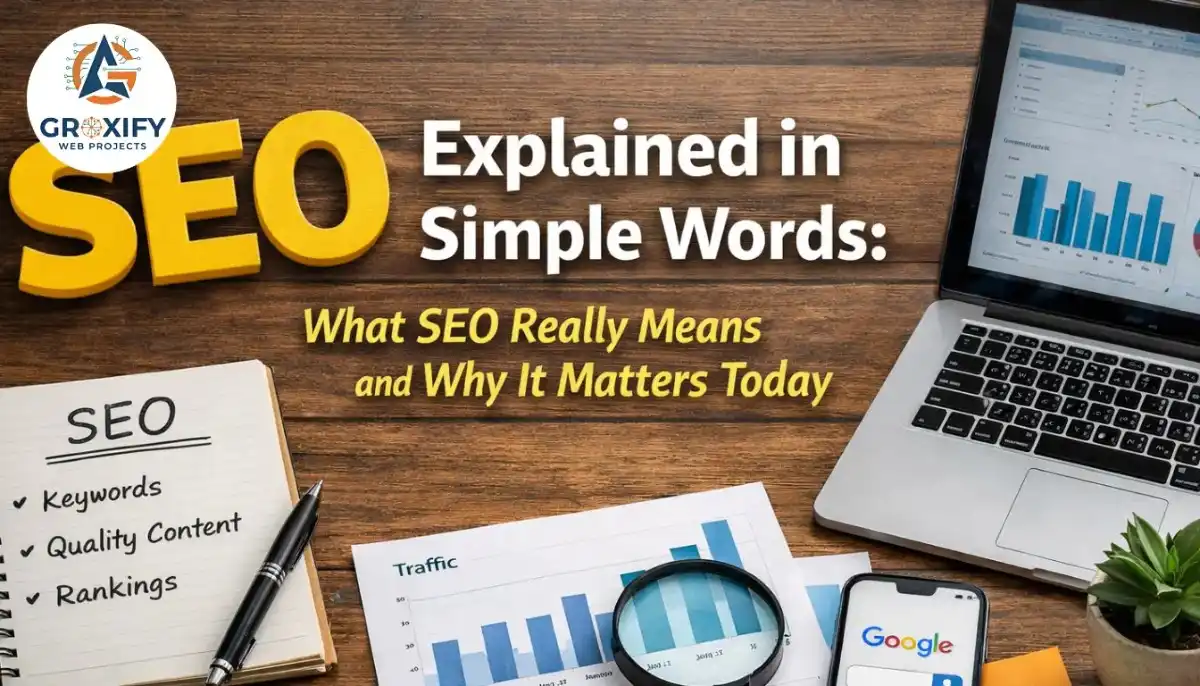
SEO Explained in Simple Words: What SEO Really Means and Why It Matters Today

Why Everyone Is Talking About SEO If you run a business, startup, or even a small shop today, you have probably faced this situation. You build a website, launch a product, or start a service. But when you search on Google, your business is nowhere to be found. Meanwhile, competitors appear on the first page and keep getting customers. This is exactly why seo has become such a big topic. Today almost every decision starts with a search. A founder checks marketing ideas. A student searches for learning resources. A customer looks for nearby services in places like Shahdara, Laxmi Nagar, or Karol Bagh in Delhi using simple searches like “best service near me”. If a business does not appear in those results, it often loses that opportunity. During the last few years while working with clients through Groxify Web Projects, I noticed a clear pattern. Businesses that focused on search engine optimization early started receiving steady traffic without depending only on ads. After 2–4 months many of them began seeing enquiries coming directly from Google search. SEO matters even more today because Google now focuses strongly on: Google AI Overview is also changing how results appear. Only content that clearly explains topics and shows real expertise tends to get visibility. So whether someone is a startup founder, digital marketer, freelancer, or student trying to learn online skills, understanding seo meaning and how it works has become almost essential. What Is SEO? Simple Meaning Every Beginner Should Understand Let us keep this very simple. SEO full form is Search Engine Optimization. In basic words, seo means improving a website so that it appears higher in Google search results when people search for related topics, services, or products. For example, imagine someone in Laxmi Nagar or Shahdara in Delhi searches on Google: Google shows many results. The websites appearing on the first page usually get most of the clicks. SEO is the process that helps a website reach those positions naturally. In my work at Groxify Web Projects, many new business owners initially think SEO is some kind of trick to push a website to the top. But in reality, it is mostly about making a website helpful, trustworthy, and easy for search engines to understand. At a basic level, search engine optimization works through three main things: SEO Area What It Means Why It Matters Content Clear pages answering real questions Helps Google understand the topic Technical setup Fast loading site, mobile-friendly pages Improves user experience Trust signals Backlinks, authority, consistent updates Builds credibility in search results When these things are done correctly, Google starts recognising the website as a useful source for that topic. Over the years, I have guided founders and small business owners who were completely new to SEO. Once they understood this simple idea, they realised something important. SEO is not about gaming Google. It is about becoming the most helpful answer for the user. That mindset usually changes how people approach their entire digital strategy. How Search Engine Optimization Actually Works Behind Google Search Many beginners think SEO means adding some keywords to a page and Google will rank it. In reality the process is more structured. Behind every Google search, three major steps happen. Step What Google Does Why It Matters for SEO Crawling Google bots scan websites across the internet Helps Google discover new pages Indexing Google stores and understands page content Determines if the page is relevant Ranking Google decides which pages appear first Best answers get top positions Let us understand this in a practical way. When someone in Delhi, Laxmi Nagar, or Shahdara searches something like “what is seo”, Google sends automated bots to scan millions of pages already stored in its index. These bots check: Then Google ranks pages that appear most useful and trustworthy. While guiding businesses through Groxify Web Projects, I often explain it like this. Google is simply trying to answer the user’s question in the best possible way. The website that explains clearly, loads fast, and helps the reader usually moves upward in search results over time. This is also why shortcuts do not work anymore. Some practices that often fail today include: Google updates its algorithm regularly. In recent years it strongly prioritises experience-based content and helpful information, especially for AI Overview results. So the real focus of search engine optimization today is simple. Build a website that genuinely helps people and makes it easy for Google to understand that value. What Are the Main Types of SEO That Businesses Use Today When people first learn about seo, they often think it is just about keywords. In reality, search engine optimization has several parts working together. Each type solves a different problem. Over the years while guiding clients through Groxify Web Projects, I usually explain SEO in four simple categories. Type of SEO What It Focuses On Example in Real Life On-Page SEO Content, keywords, page structure Optimising blog posts and service pages Technical SEO Website speed, mobile usability, site structure Improving loading time and Core Web Vitals Off-Page SEO Authority and trust from other websites Backlinks and brand mentions Local SEO Visibility in location-based searches Ranking for “services near me” On-Page SEO This is where most SEO work begins. It includes: Many businesses ignore this and publish thin content. Google now prefers detailed helpful pages that solve user problems. Technical SEO Even good content struggles if the website itself has issues. Technical SEO focuses on things like: For example, I once worked with a startup website whose pages took 7 seconds to load. After fixing speed and mobile layout, traffic improved within a couple of months. Off-Page SEO This part builds trust. When other websites mention or link to your site, Google sees it as a credibility signal. However, shortcuts here can cause damage. Buying spammy links or using fake link networks usually leads to ranking drops later. Local SEO This is especially important for businesses serving specific locations. People in areas

SEO Explained in Simple Words: What SEO Really Means and Why It Matters Today Read More »

Scroll to Top