Everyone says “build your email list.” But nobody really stops to explain why email specifically, or what it actually does for your business that posting on Instagram does not.
Table of Contents
That question, why do we use email at all when there are a dozen other channels available, is worth taking seriously. And the honest answer is more practical than most marketing articles make it sound.
This article covers the real reasons businesses use email marketing, the different types of email campaigns, where it genuinely outperforms other channels, and where it has limits. By the end you will know whether email makes sense for where you are right now.
Why Do We Use Email Instead of Just Posting on Social Media
This is a question most marketing articles skip entirely. They assume you already know email is valuable and jump straight to tactics. But if you are starting out or reconsidering your approach, the “why” actually matters.
Social media platforms control who sees your content. You can have 10,000 followers on Instagram and your post might reach 400 of them. That is not your audience, that is their audience, and they can change the rules whenever they want.
Email is different. When someone gives you their email address, they are giving you direct access to their inbox. No algorithm deciding whether your message gets shown today.
You Own the List. That Is the Point.
Your Instagram account can be suspended. Your Facebook page can lose reach overnight. Your TikTok might get restricted. But your email list sits in a file you control. You can export it, move platforms, and keep communicating with those people no matter what.
That is why marketers call an email list an “owned asset” – something you built that nobody can take from you. Compare that to a social following, which is essentially borrowed space on someone else’s platform.
People Check Email With a Different Mindset
Scrolling social media is passive. People are browsing, not necessarily looking for anything specific. Email is different. When someone opens their inbox, they are ready to engage with something they chose to sign up for.
That shift in intent matters. There is a real difference between someone stumbling across your content and someone who already said yes, I want to hear from you.
The Real Advantages of Email Marketing
It Is Affordable, Especially Early On
Most email marketing platforms are free up to a few hundred subscribers. Even at larger list sizes, the cost per email sent is a fraction of what paid ads cost.
Here is how to think about ROI – return on investment, meaning what you earn compared to what you spend. Email marketing consistently delivers one of the highest ROI figures of any marketing channel because you are reaching people who already showed some interest in you.
You Can Personalize What You Send
Email lets you send different messages to different groups based on what people did or did not do. This is called segmentation – dividing your list by behavior, location, interest, or purchase history, so each person gets something relevant to them.
Someone who just signed up gets a welcome email. Someone who bought a product gets tips on using it. Someone who has not opened anything in three months gets a “still interested?” check-in. None of this is possible with a social post that goes to everyone at once.
Email Converts Better Than Most Channels
Conversion means getting someone to take a specific action, like buying a product, booking a call, or downloading something. Email drives higher conversion rates than social media for most businesses because the people on your list are already warm. They already know who you are.
A cold social media ad asks a stranger to buy. An email to your list reminds someone who already liked your work to take the next step. Those are very different conversations.
You Get Actual Data
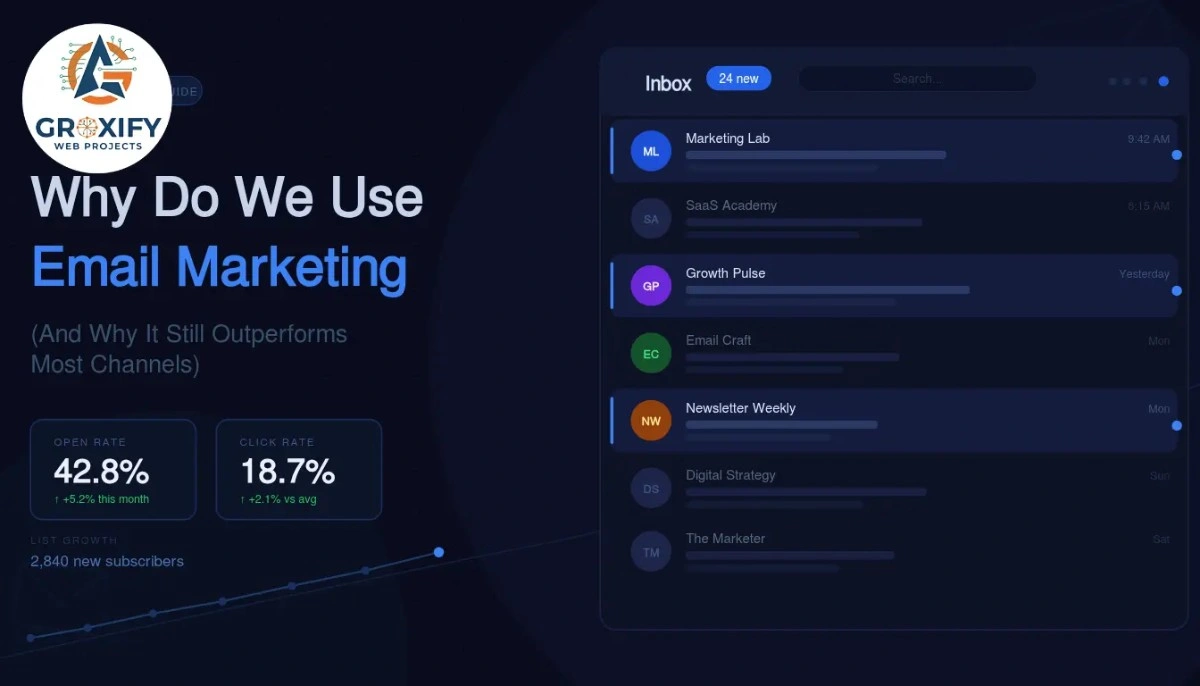
Every email platform shows you open rate (the percentage of people who opened your email), click rate (the percentage who clicked something inside it), and unsubscribe rate (the percentage who opted out). You can see exactly what is working and what is not.
Social media gives you likes and reach. Email gives you behavior data. That difference matters when you are trying to improve.
Types of Email Marketing (And What Each One Does)
Not every email does the same job. Here is how they break down:
Welcome emails are sent automatically when someone joins your list. The goal is to introduce yourself and set expectations for what they will receive.
Newsletter emails are sent regularly, weekly or monthly, to share updates, insights, or useful content. These build the relationship over time without asking for anything.
Promotional emails announce a sale, launch, or specific offer. They are designed to drive one clear action, usually a purchase.
Drip sequences are a series of pre-written emails sent automatically over days or weeks. Useful for onboarding new users or nurturing potential buyers who are not ready yet. “Nurturing” simply means building trust gradually before making any ask.
Re-engagement emails go to subscribers who have gone quiet. The goal is to win them back or cleanly remove people who are no longer interested.
Transactional emails are triggered by a specific action, like an order confirmation, shipping update, or password reset. These have the highest open rates because people actively expect them.
Most businesses use a combination of all of these, not just one type. Each one serves a different stage of the relationship.
Where Email Marketing Has Real Limits
Most articles skip this part entirely. They make email sound perfect. It is not.
Building a list takes time. You will not send your first email to 5,000 people. Getting someone to hand over their email address requires actual trust, and trust takes effort to earn.
Deliverability can be an issue. Deliverability means whether your email actually lands in the inbox or gets sent to spam. If your emails go to spam, nobody reads them. This depends on your sending reputation, the quality of your content, and the platform you use.
People will unsubscribe. That is completely normal. But if your unsubscribe rate keeps climbing, it usually means the content is not right for the people on your list, or you are sending too often.
And if your list is built on shortcuts – buying email addresses, adding people without consent – your results will be poor and email platforms may block your account entirely.
Email marketing works well when it is built with real care. Shortcuts mostly backfire.
Email vs Social Media vs Paid Ads: A Quick Comparison
| Factor | Email Marketing | Social Media | Paid Ads |
|---|---|---|---|
| Who controls your reach | You | The platform | The platform |
| Cost to start | Free to low | Free | Moderate to high |
| Do you own the audience | Yes | No | No |
| Targeting type | Behavioral | Demographic | Demographic |
| Conversion rate | High | Low to medium | Medium |
| Time to build results | Weeks to months | Months to years | Immediate but ongoing cost |
| Data depth | Deep (opens, clicks) | Surface (likes, reach) | Medium |
Why Do We Use Email Marketing for Business Growth – The Practical Answer
Small business owners and freelancers often ask whether email is worth the effort when they are already managing everything else. The short answer is yes, but only if you treat the list as a real asset rather than an afterthought.
Here is the practical part. Every person on your email list said yes to you at some point. They visited your site, read something, or heard about you, and they gave you a way to reach them again. That is genuinely rare. Most people who find your business online never come back.
Email is how you stay in front of those people. Not every day, not with a sales pitch every time, but consistently enough that when they are ready to buy, you are the name they remember.
At Groxify Web Projects, we often see clients overlook this entirely in the early stages, then wish they had started building a list sooner once they see how the results compound over time. A small engaged list almost always outperforms a large inactive one.
Who Benefits Most From Email Marketing
This is not the same for everyone. Here is how it plays out depending on who you are.
If you are a freelancer, email helps you stay in touch with past clients, share recent work, and generate repeat business without constantly sending cold pitches.
If you run a small business, email drives repeat purchases, announces new products, and builds a customer base that actually comes back.
If you are a trainer or educator, email is your main tool for course launches, cohort openings, and keeping potential students engaged through a longer decision cycle. A course is not usually an impulse purchase. People sit with the decision for weeks. Email is what keeps you present while they think.
If you are a complete beginner, start simple. A free plan on any major platform, one welcome email, and a clear reason for people to subscribe. That is enough to begin, and you can add complexity as you grow.
The Bottom Line
The real reason why we use email marketing comes down to one thing: it is the only channel where you own the relationship, control the reach, and can measure what actually happens. Every other channel is rented space.
Start small. Pick a platform, create a simple sign-up, and give people a reason to join. Do not wait until your list is “big enough.” The right time to start was earlier. The second-best time is now.
FAQ
Email gives you direct access to your audience without depending on an algorithm. You own the list, so no platform can cut your reach overnight. Social media controls who sees your posts. Email goes straight to inboxes of people who chose to hear from you.
Email marketing is sending planned, permission-based emails to a list of people who signed up to hear from you. It is used to build trust, share useful content, and get people to take action like buying a product, booking a service, or returning to your site.
Yes. Email consistently delivers higher conversion rates than most digital channels because you are reaching people who already showed interest in you. It works best when your list is built properly and what you send is genuinely useful to the people receiving it.
No. A small, engaged list almost always outperforms a large, inactive one. Even a few hundred subscribers who regularly open your emails can drive real business results. Focus on list quality first, and size will grow naturally over time.
You own your audience, it is affordable even for beginners, it allows behavioral personalization, and it drives higher conversions than social media. You also get clear performance data through open rates, click rates, and unsubscribe tracking, which makes improvement straightforward.
The main types are welcome emails, newsletters, promotional emails, drip sequences, re-engagement emails, and transactional emails. Each serves a different purpose at a different stage of the customer relationship, and most businesses use a mix of several.
Yes, especially because it is low-cost and keeps you in front of past and potential clients without constant paid advertising. It builds repeat business over time. The biggest mistake is waiting too long to start because the list compounds in value the longer you build it.
There is no fixed rule that works for everyone. Weekly works well for many businesses. What matters most is consistency and usefulness. Sending too often with thin content increases unsubscribes. Sending rarely means people forget who you are. Test and adjust based on how your audience responds.
The subject line is the biggest factor. It needs to be specific, create real curiosity, or promise something useful without being misleading. The sender name also matters. People open emails from names they recognize and trust. Consistent sending over time builds that recognition.
Most platforms offer free plans for smaller lists. Start by choosing one platform, setting up a sign-up form on your site, and offering something useful in exchange for the address, like a checklist, short guide, or exclusive tip. Write one welcome email. Keep it simple and send it.

Rohit Singh is the Founder of GROXIFY WEB PROJECTS LLP with many years of hands-on experience in digital marketing, including SEO, PPC, social media, email marketing, content writing, and WordPress development. He has worked with global clients across industries and helped businesses achieve 5x–10x revenue growth through data-driven strategies and practical execution. Rohit actively manages digital teams, builds business strategies, plans marketing systems, and oversees execution to drive consistent traffic, leads, and long-term business growth.